China’s “Bubble Face” Problem


Somewhere in China, a woman woke up looking like someone else. She had paid for a rounder, more youthful look, and for a few months it worked — then the tissue kept expanding. Cells that were told to divide were never told to quit. Dr. Hillary Jenny explains what is actually happening under the skin, and why lipomas buried in the facial muscle are the part nobody gets warned about.
Dr. Jenny joins Dr. Christopher Chang for her first episode, fresh off a Hopkins residency and an aesthetic fellowship in Beverly Hills. In Classified, a mom finds a clinic willing to prescribe growth hormone for her perfectly healthy 13-year-old — a kid who has never once asked for it. They also get into what to ask when someone wants a treatment that is only legal overseas, why exosomes belong on top of the skin and never under it, and the growth factor already being sold for under-eyes in the US: the same molecule surgeons have put on diabetic foot ulcers for 20 years, carrying a black box warning for malignant transformation. Nothing that grows tissue only grows the tissue you asked for.
South China Morning Post, China dad’s growth hormone investment for daughter sparks debate over societal pressure
Instagram, Bubble face trend
HOSTS
Jackie O’Brien RN, BSN, CNOR
Clinical Director at Cedar Lane Surgery Center
With 12 years of OR experience and training at Georgetown University Hospital, Jackie brings expert-level knowledge in plastic, trauma, general, vascular, and ophthalmic surgery. A proud George Mason alum and CNOR-certified perfectionist, she leads with passion, precision, and a love for all things surgical. Off the clock, she’s exploring new restaurants, hitting concerts and wineries, or hanging out with her cat—Biggie Smalls, the real boss at home.
Christopher Chang, MD
Plastic Surgeon
Considered to be one of the top plastic surgeons in DC, Dr. Chang specializes in facial and breast augmentation surgery and has acquired several advanced degrees and training from some of the most selective universities in the country. Double board certified in plastic and facial plastic surgery, with specialized experience in facial surgery and pediatric reconstruction, Dr. Chang prioritizes precision over trends and thoughtful care over pressure. Based in Washington, DC, he serves a diverse community, respecting each patient’s preferences for discretion, communication, and natural-looking results.
GUEST
Hillary Jenny, MD, MPH
Plastic Surgeon
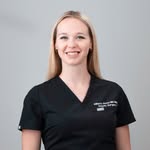
Dr. Hillary Jenny is a plastic surgeon at Congressional Plastic Surgery specializing in head-to-toe aesthetic surgery, with particular interest in rhinoplasty, facelift, and mommy makeovers. She graduated with honors from MIT with a double major in neuroscience and music, earned her MD and MPH at the Icahn School of Medicine at Mount Sinai, completed her plastic surgery residency at Johns Hopkins, and trained in aesthetic surgery in Beverly Hills before returning to Northern Virginia.
About Secret Services
In DC, everyone has secrets — especially when it comes to cosmetic surgery. Plastic surgeon Dr. Christopher Chang and his sharp-witted team see everything and say nothing — except on this podcast, where every week you’ll get answers to confidential patient questions. Because in an era when aging gracefully and looking natural is easier than ever, it all depends on who you know—and what they’re willing to tell you.
Links
Learn more about Washington, D.C. plastic surgeon Dr. Christopher Chang
Follow Dr. Chang on Instagram @dcplasticsurgeon and @congressionalplasticsurgery
And on TikTok @congressionalpsurgery
Host: Christopher Chang, MD
Producer: Eva Sheie @ The Axis
Assistant Producers: Mary Ellen Clarkson & Laura Mayusa
Engineering: Chris Mann
Theme music: Harry’s Perfume - Harry Edvino
Cover Art: Dan Childs
Secret Services is a production of The Axis
Dr. Jenny (00:01):
Basically, you're getting these cells that are dividing uncontrollably. So it's not allowing them to have their normal signal of, okay, you divide until a certain point. It just keeps going and going and going.
Dr. Chang (00:08):
But a subcutaneous inject growth hormone in subcutaneous? You are listening to Secret Services where we discuss the procedures nobody admits to, but everyone's curious about. I'm your host, Dr. Christopher Chang. Are you laughing at me?
Jackie (00:28):
Yeah, you're , You're asking a lot of -
Dr. Chang (00:31):
My ADDs are really kicking in.
Jackie (00:32):
I'm going to sprinkle some Adderall in here.
Dr. Jenny (00:34):
Your hypomania.
Jackie (00:35):
Probably because you drink that ginormous McDonald's coffee.
Dr. Chang (00:38):
Do you know how many calories are in that thing?
Jackie (00:39):
Yeah, that's why it's delicious.
Dr. Chang (00:40):
I wanted to get a raise. It's like 250 calories for. I just want to get coffee and coffee's usually low calorie, but I was like, "Oh, it's warm. I'll get an iced one." Iced one's like milk, essentially.
Jackie (00:51):
I mean, that thing is so pale.
Dr. Jenny (00:54):
I mean, is there any coffee in there?
Dr. Chang (00:56):
It's milk and a tad of coffee.
Jackie (00:59):
Dash, it's sugar. Sugar water.
Dr. Chang (01:02):
All right, so we're back. We have a great new guest, Dr. Hillary Jenny, who's here. So before we get going, I want you to tell us a little bit about yourself. Welcome to the show.
Dr. Jenny (01:12):
Thanks so much. Yeah. So I joined the practice about a year ago, but I stalked you for a couple years before that to get a job. So been around. I did the Hopkins program, which is kind of how we got connected. And then I did fellowship over in LA. So I was in Beverly Hills working with some really amazing surgeons, learning kind of the most up-to-date aesthetic stuff that you don't always see in residency. And then I came back here.
Dr. Chang (01:35):
Yeah. So great. Welcome back to the area. You've been in practice now for a while. What's it like being an attending surgeon instead of being a trainee, which you've been for nearly in the last decade?
Dr. Jenny (01:47):
It is the most amazing thing in the entire world, which I'm sure you remember as well. I've been telling other residents who've reached out to me about different things. There is a light at the end of the tunnel. It's beautiful, sunny paradise over here. So just hold out, get through those 80 plus hour work weeks and you'll get here.
Dr. Chang (02:04):
I think the best thing is being able to take all the experiences that you've had, learning from how all these surgeons and doctors treat patients and run their practices and do surgery and cherry-picking the best out of all of that and making that your practice.
Dr. Jenny (02:21):
Absolutely.
Dr. Chang (02:21):
And making those decisions, that's kind of the fun part, I think.
Dr. Jenny (02:24):
Yeah. I mean, I learned from every single person I've ever been able to learn from. Everyone in residency, even doing reconstructive stuff, you can learn from a lot about how they handle their patients, how they handle complications, how they plan out surgeries. And then over in my aesthetic fellowship, I got to work with a lot of different aesthetic surgeons. And there are little bits that I loved from how different people did it. So I feel like my techniques are now sort of a hybrid of eight different people's techniques plus the little bits that I've learned along the way as well. So it's been really fun to kind of incorporate all of those pieces into my own practice.
Dr. Chang (02:55):
Yeah. And it's also good to have both East Coast and West Coast perspectives. I mean, there's a lot of stylistic things, trendy things that are different from place to place. And then of course it attracts different surgeons that may have different styles and patients that are looking for different goals.
Dr. Jenny (03:12):
Yeah, definitely. I mean, a lot of stuff comes to California first or LA first, I guess specifically. So it's kind of cool to see some of those technologies. Do we like them? Do we not? Not always. And then kind of see what I want to bring back.
Dr. Chang (03:23):
Yeah. And then you were, of course, after so much training, you were deserving of a little break. So tell us a little about your recent trip.
Dr. Jenny (03:31):
Oh yeah. I thought you were talking about maternity leave. And I was like, I don't know if my four weeks after having a child can count as a break.
Dr. Chang (03:37):
No. Although a tough boss would be like, "Come on, get back to work." But of course - Yeah, four weeks. We're very understanding here.
Dr. Jenny (03:44):
Yes, you are. No, I did just come back from Slovenia, took both kids, which is actually an amazing, amazing trip. So highly recommend going there. No direct flights really from IAD, but still -
Dr. Chang (03:54):
Was it crowded?
Dr. Jenny (03:56):
Not really. I mean, it was in the sense that they were -
Dr. Chang (03:58):
Touristy?
Dr. Jenny (03:58):
At capacity, I would say. But everywhere we were, we're kind of small villages, and so their capacity for tourists is like 100. So I felt like every place was really not overrun at all. And it was just beautiful mountain vistas and prosciutto and lakes.
Dr. Chang (04:12):
That sounds amazing.
Jackie (04:13):
Amazing.
Dr. Jenny (04:14):
Yeah. A dream.
Dr. Chang (04:14):
Sounds amazing.
Dr. Jenny (04:15):
A few after is too.
Dr. Chang (04:17):
Yeah, it sounds so good. I mean, this summer's been good for travel and that kind of stuff. And I'm glad you got some time to really relax and reset. As you guys know, my wife travels a lot for work. And so sometimes we are traveling separately, but she's been to China a bunch of times for work. And she's always telling me culturally the differences. And that kind of leads us into kind of our conversation today was cosmetically, there's so many things coming out of Asia now. You see all the K-beauty stuff at Costco and stuff like that.
Jackie (04:49):
I just went in Fair Oaks Mall yesterday, which is a dying mall, but it's really sad in there. But I walked by this new store and it literally was just Korean beauty products.
Dr. Chang (05:00):
The whole store.
Jackie (05:01):
Yeah. In the mall. I was like, wow. But it's so popular right now.
Dr. Chang (05:05):
The whole culture's like that. I saw a store not that long ago that was all Laboo Boos. I was like, oh my God, you guys missed the trend. It's over now. But they had all this sort of very popular, trendy -
Jackie (05:16):
The squishy things. The squishy dumplings, that's an Asian trend.
Dr. Chang (05:20):
Asian toys. These are basically things that are, so all this culture's getting really popular over here.
Jackie (05:26):
Well, let's talk about this lady in China. Somewhere in China, this woman woke up with a face she doesn't recognize, and it wasn't aging that did it. It was the fix. None of this stays in one country. So if a patient brings in a procedure they read about that's only being done overseas, that isn't approved here, what's the first thing you want to know about it?
Dr. Chang (05:46):
Want to take it?
Dr. Jenny (05:48):
Sure. So I mean, I always have to kind of, not to use this phrase, do my own research on a lot of these technologies. And the patient might tell you something, but they're not always told the full story. And so I want to know what it is, and then I need to look into it and see what's the science behind this? What papers are published on this? What is actually happening? And then since much of the time they're coming in for us to fix what may have been done, I want to see what they looked like before. Where were things done? There aren't always accurate reports. So even if you ask for an operative report or a procedural report from a different country, really hard to get, not always very accurate. So I kind of want to get a sense of what actually happened.
Dr. Chang (06:23):
So that's a great point. I've had patients who travel to Europe or they have European citizenship and they want to try some stuff that's there. And we don't have it here. And so the thing that I tell patients is that if I had it, I would know about it and I could give it to you, but I can't. Sometimes people say, "Well, what if I bring this from Italy and can you inject it?" And I'm like, "No, I can't do that because I don't know anything about this. It's not FDA approved." And frankly, the industries are so regulated in the US and it's kind of expensive for these companies to get it through the regulating process. And so that's why the cost of doing stuff is higher here in the US like, "Oh, the same injection is cheaper in this country or that country." Yeah, because there's a lot of barriers they got to get through legally and regulatory-wise to get through, but that's all for patient safety.
Dr. Jenny (07:13):
Absolutely. Yeah. I mean, we get this question a lot with injecting exosomes, and that's not something that you're able to do, that's not FDA approved, but patients are always like, "Oh, well, if I can get it," you don't know where they're getting it from. We don't know the manufacturing requirements with these facilities that they're getting them from. And we see that a lot with this, also with peptides coming in.
Dr. Chang (07:29):
But just to be clear, what's the right way of administering exosomes?
Dr. Jenny (07:33):
Topically.
Dr. Chang (07:33):
Topical, right? So on the skin surface, you can do that, but it's not FDA approved and not approved to basically inject.
Dr. Jenny (07:40):
Yeah. So you got to treat a light skincare and you can do microneedling. So you're opening up little channels in the skin and applying it topically, but it absolutely is not approved for injection into the human body. And I don't think safe practices are really going to be doing it.
Dr. Chang (07:53):
Right, right. So I mean, you have to think about if people are doing things that are not FDA approved, it's sort of like, are you going to a place that's bending the rules or doesn't know the rules? And then therefore, do they not know what would happen if you would have a complication? So definitely look at your provider or your clinic or office, doctor's office and say, "Do they really have my best interest?"
Dr. Jenny (08:16):
Yeah. I mean, I'm anti-sketch, so I think that's a good policy to have as a practice.
Dr. Chang (08:20):
Yeah. I mean, conservative doesn't always mean lame. You're just safe. You don't want to hurt anybody, really. That's really our goal.
Jackie (08:27):
Yeah, exactly.
Dr. Jenny (08:29):
Absolutely.
Jackie (08:30):
All right. So here is a little, it's classified segment. So my daughter is 13 and the shortest girl in her class. Her pediatrician says she's healthy and completely in the normal range, but I found a clinic that will prescribe growth hormone anyway. She has never once asked me for this. I keep telling myself I'd regret not doing it more than I'd regret doing it. Is that a real reason?
Dr. Chang (08:54):
Yeah. Well, as a parent, you want the best for your kids. So what happens, I think as a parent, you kind of are trying to make sure that they're developing normally, that they're well adjusted. And of course they say please and thank you and all sorts of stuff. You want your kids to be not only great people, but also get along in society well and that kind of stuff. But we're not endocrinologists, so take this with a grain of salt. But I think that as parents, you kind of think about tracking, is everything going the right way? So actually one of my kids, I was sort of not sure, hey, does he need some growth hormone? Is he falling behind on the curve? And I have four kids, so they're all different. Some of them are way high on the curve at age six and some of them are lower.
(09:44):
So it all depends. Every kid is going to be different. They're not clones of each other and they can be different. But in general, I think growth hormone is a regulated thing. You don't want to mess with your kids on your own. You really got to do it under the guidance. You want to give them stuff that can change how their cells develop or the timing of puberty and things like that. You got to really do that with somebody who's. You can experiment on it yourself all you want. But when you get to your kids, I mean, you really got to have -
Dr. Jenny (10:12):
A little more caution. Yeah, and focus on safety.
Jackie (10:14):
And also my thing, so she's the shortest girl in the class. Okay, but still how short is that? And if she's still in the normal range, it'd be one thing if she was out of the normal situation and you're like, "All right, we need to do something." But if she's considered in the normal range, is it really fair to step in?
Dr. Jenny (10:35):
And she's staying on her own growth curve. I mean, every kid has their own kind of intrinsic weight that their bodies want to be. Both of my kids are 90th percenters. They wouldn't sleep through the night until they got big. And that's just how they are. And then I feel like that's how they're always going to be. That's their growth curve. My sister's kids are on the smaller and that's their growth curve. Both sets of kids, super healthy, no pediatrician concerns, and that's fine.
Jackie (10:55):
Yeah. And of course it would be nice to be a tall model, but how much is this girl going to grow, one? And I don't think being a short girl is even really a bad thing at all.
Dr. Jenny (11:06):
Not at all.
Dr. Chang (11:06):
Once your're 13? I mean, many of the girls have already started puberty. And so you're not going to grow much more after that. Even if you give them growth hormone, I can only think of bad things that could happen really if you shred it. So at this point they might've missed the boat. But again, I'm not an endocrinologist, but I know that they would rather initiate that, identify that problem earlier because you're trying to keep, I think, the growth plates open. Absolutely. And you're trying to allow the non-pubertal growth to really catch up and then your pubertal growth spurt kind of does its thing.
Jackie (11:41):
I also feel like at 13 as a girl, if she's never verbalized this to her mom, she's old enough to be like, "Oh, I am really insecure about being short." But if she's never said anything to the mom about -
Dr. Jenny (11:53):
That's the age of assent. They have their own opinions and thoughts. And if they've never said anything, why are we creating a problem? Just because we want to feel like we're giving you every chance possible.
Jackie (12:02):
Yeah.
Dr. Jenny (12:03):
And there's problems with these meds too. I mean, they increase your risk of diabetes. They can cause orthopedic issues if you're inducing a lot of rapid bone growth. I mean, nothing is without risk. Every intervention has risks. And so if there's not really a problem, according to your child's medical doctor, I don't know what we're fixing.
Jackie (12:19):
Yeah.
Dr. Chang (12:20):
Yeah. People often think because it's called growth hormone or it's got this sort of almost positive name that it's going to be good. So we also have these things called growth factors. People are like, "Oh, I want a growth factor. It'll rejuvenate me or it'll help." Yeah, because we use growth factors to build muscle, build bone, repair things. But these are all sort of in the milieu of how your body heals and does other stuff like that. So it's not all the words that we use to describe them in English. These are chemicals and they're biological products.
Jackie (12:56):
Well, right. And the mom, or I guess it could be the dad. I keep telling myself I'd regret not doing it. It's like -
Dr. Jenny (13:02):
Fear of regret and not a reason to do something for your kid.
Jackie (13:04):
Yeah. I mean, that's crazy to overstep this boundary.
Dr. Chang (13:09):
Well, there's probably some internal feelings of being like, maybe I'm not as tall as I want to be.
Jackie (13:16):
Yeah, exactly. I feel like it's more a reflection of that.
Dr. Jenny (13:19):
Sounds like the parent needs to go to therapy.
Jackie (13:20):
Yes. 100%. All right. So let's move on to this Chinese face we were talking about. All right. A growth factor injection marketed in China as the route to a plump, youthful baby face is leaving women with severe facial swelling that doesn't resolve, now known online as bubble face. Okay? We can. Trending the same month, a Chinese father spends about $880 a month on growth hormone injections for his 12-year-old daughter calling height a worthwhile investment. I feel like over in China, they're definitely obsessed with height.
Dr. Chang (13:59):
They're obsessed with everything. Height, but looking young. Yeah. They're obsessed with wealth status. Even though it's a communist country, there is a lot of wealth and status.
Dr. Jenny (14:09):
Signaling, yeah.
Dr. Chang (14:10):
Yeah.
Jackie (14:10):
Yes. So okay. When they're injecting this growth factor, what is going on? Why is it making them look that way?
Dr. Chang (14:20):
I know nothing about that.
Dr. Jenny (14:21):
I looked into it a little bit. A little bit.
Dr. Chang (14:24):
I could imagine, but go ahead.
Dr. Jenny (14:26):
They inject growth hormone and then it induces cellular hypertrophy and hyperproliferation. So basically you're getting these cells that are dividing uncontrollably. So it's not allowing them to have their normal signal of, okay, you divide until a certain point. It just keeps going, going and going.
Dr. Chang (14:41):
But it's a subcutaneous growth hormone in subcutaneous?
Dr. Jenny (14:46):
Then it has that localized effect where they're injecting it. And so people will initially look good because it's like anything that gives you a little bit of facial plumping, you look a little more youthful. Things aren't as saggy, but it doesn't stop. And so that's why they're saying a year later you wake up and you don't look good because your face is puffy. Some people have generalized puffiness from that proliferation happening everywhere. Some people have localized issues like lipomas in their facial musculature, specific nodules and lumps that have to be addressed. So it's a big problem.
Dr. Chang (15:15):
So yeah. So I guess this is a problem of when we have a therapy, we say, okay, does it work at all? Is it basically snake oil? Does it do jack for you? Or does it work well and can we control what the result is? And is the result too much? So here's a situation where you're getting an injection of something and I guess it is legitimately having a change.
Jackie (15:42):
It's doing something.
Dr. Jenny (15:43):
It's doing too much.
Dr. Chang (15:45):
And then -
Jackie (15:45):
Also is that look like, are they trying to achieve that look or are they saying that this is an unwanted side effect?
Dr. Jenny (15:53):
I think it's a bell curve of where they're happy and then it's too much for them.
Dr. Chang (15:57):
So here's the real scary thing is that when you get something that's going to grow your cells or heal you or whatever, when you heal, there's cell growth, right?
Dr. Jenny (16:09):
Yeah.
Dr. Chang (16:11):
Cell growth can lead to cancer and tumor genesis. So as a physician or somebody in medical training, we think about cell growth, it's got to be controlled. There's a signal in your body when you're healing a cut or a wound to say stop healing. And if it doesn't stop healing, you get too much, you can get a hypertrophic scar that's a thick or a keloid scar. That's not malignancy, but it is an overgrowth of cells.
Dr. Jenny (16:39):
That's what I thought of when I saw these people with lumps. It feels like a benign tumor essentially. And I don't know about the cancerous potential, but they probably haven't even studied that yet. But it looks like they have benign growths all over their body.
Dr. Chang (16:52):
Well, it's kind of actually in the US there was this PDGF eriescence injection that a lot of the injectors were getting into. It was getting kind of controversial. I don't know if you guys heard about it at all.
Jackie (17:05):
I see it on Instagram.
Dr. Chang (17:07):
I'm not sure it's taken off, but it's a platelet derived growth factor. It's a growth factor that comes out of your platelet cells. And they are touting it as a cosmetic treatment for under-eyes. So you would inject this in the under-eyes and rejuvenate that area. But in plastic surgery, this molecule was purified and used as something called regranix for diabetic wounds. So a foot ulcer that wouldn't heal in the hospital for years, like decades, maybe 20 years it's been around. So we'd put it on these dying wounds that are gross and have no circulation. And some plastic surgeons would believe it would hurt others, how it is in wound care. Some people say, "Oh, it doesn't work very well." But of course they're all very expensive. But the biggest black box warning on it was potential for malignancy transformation.
Dr. Jenny (17:57):
Yeah.
Jackie (17:58):
That is so scary.
Dr. Chang (17:59):
And now it's like, okay, well, it's going to be cosmetic treatment. So I think that unless there's been a breakthrough of how we can control those factors, which will be a great breakthrough, I think there's a little bit of education that's got to go on.
Dr. Jenny (18:14):
Definitely. I mean, I love regenerative aesthetics. I love that, but I like using your own tissue because it's going to be your own tissue. It's inert. There's no immune reactions. It's not these uncontrolled hyperphysiologic doses of things that are artificial or just too much for your body. But if you're using your own fat, your own body's equipment, we have within our bodies so many tools that we can harness scientifically to look better. And so we just need to stick with that and get out of the lab a little bit.
Jackie (18:43):
Well, and then the downside is some people, they travel to get this stuff done and then they come back to America and it's like, "Oh God, what did I do? I hate this." And then you're going to one of you guys here to be like, "Fix me." And you're handed this problem that's not even regulated in the US. So then what?
Dr. Chang (19:04):
Yeah, yeah, exactly. And that's the thing guys. I don't know if that's reversible. I don't want to fix that problem.
Dr. Jenny (19:13):
I did read a paper out of some physicians in China who are trying to. So I can tell you what they're trying to do.
Dr. Chang (19:17):
They're going to have a lot of experience with it hopefully. Or not hopefully, but at least they'll be able to guide it if that happens or that patient comes over to the US. But I think it really kind of says, what do we do when a beauty trend or a deal kind of moves faster and then we need to put the brakes on? Unfortunately, I think that what we often see is that something bad has to happen for some scandal or regulation or legislation or something.
Dr. Jenny (19:53):
And even then it's slow moving. I mean, how many stories have we heard about people injecting silicone, pure silicone into their face, their butt in Brooklyn somewhere in a basement, somebody's injecting diesel?
Jackie (20:04):
Yeah, the concrete into the BBLs.
Dr. Jenny (20:06):
Yeah. So many cases like this. And we have some regulation, but it's still not enough because these things are still happening. And I took out pure silicone from people's faces and butts in fellowship.
Dr. Chang (20:15):
It's the worst. That's the worst.
Dr. Jenny (20:17):
It's so hard. It's impossible. You can't get it all. Once it's in there, you can't get it all.
Dr. Chang (20:21):
Well, be careful out there. Yeah, that's the message.
Jackie (20:24):
Yes.
Dr. Chang (20:25):
Don't do anything too on the fringe. And we really do have safety as sort of our guiding light, I think, in our practice. And I think most of board certified plastic surgery practices, we're really trying to make sure that the patients don't have any irreversible damage in the long term.
Jackie (20:41):
Yeah.
Dr. Chang (20:41):
Absolutely.
(20:42):
And we do the right thing.
Jackie (20:43):
Cheaper is not better.
Dr. Chang (20:44):
Yeah. Don't go overseas for something wild and crazy.
Jackie (20:48):
Yeah, something brand new overseas.
Dr. Chang (20:50):
All right. Well, any comments or questions, leave us a note below. We'll see you on the next episode. Thanks for watching. Thanks for listening to Secret Services, the podcast where we see everything and say nothing except right here. I'm Dr. Christopher Chang, double board certified plastic surgeon located in Tysons, Virginia. Follow us on TikTok @congressionalpsurgery or on Instagram @congressionalplasticsurgery. To send us a classified message or to hear more episodes, go to secretservicespodcast.com. Links to everything we talked about on today's show are available in the show notes. Oops, patient's here. We got to go.
Dr. Hillary Jenny is a plastic surgeon at Congressional Plastic Surgery specializing in head-to-toe aesthetic surgery, with particular interest in rhinoplasty, facelift, and mommy makeovers. She graduated with honors from MIT with a double major in neuroscience and music, earned her MD and MPH at the Icahn School of Medicine at Mount Sinai, completed her plastic surgery residency at Johns Hopkins, and trained in aesthetic surgery in Beverly Hills before returning to Northern Virginia.