Remove, Replace, Regret? What You Need To Know About Swapping Breast Implants


When someone panics the day before surgery and insists on the tiniest implant in the range, Jackie O’Brien knows how it ends: within a month, they’re asking when they can get the next size up.
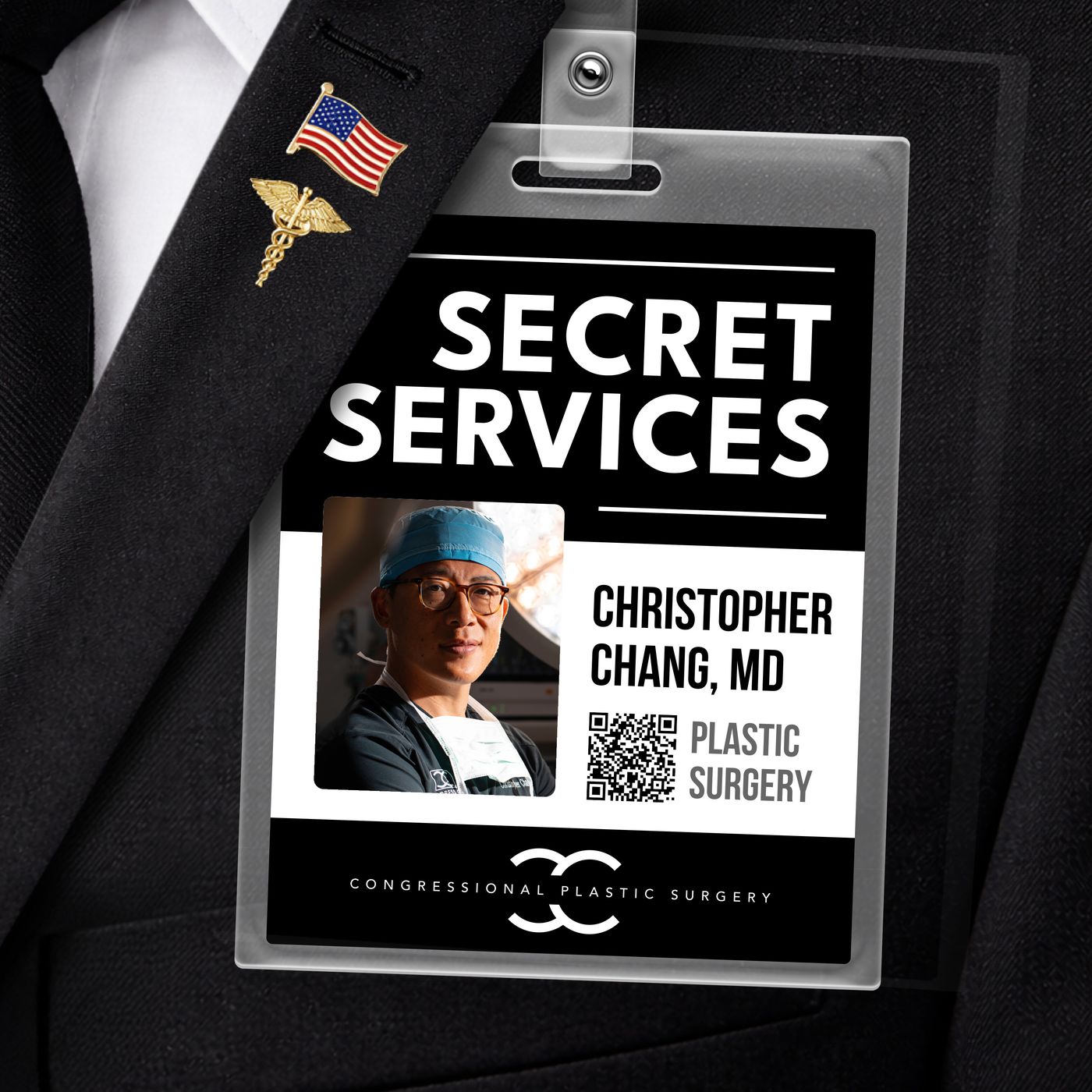
Dr. Christopher Chang explains why swapping big implants for small ones is not as simple as it sounds. A small implant in a pocket built for a large one leaves empty space, unless he tightens the capsule to match.
Country singer Jessie James Decker is trading her “very large” breast implants for what she calls “juicy ballerina boobies,” a downsize, not an explant. Dr. Chang and Jackie answer an anonymous question from a woman who got 500 CC implants at 24 and doesn’t want them at 36, compare explant versus downsize, and explain why a lift often pairs with a smaller implant after several pregnancies. They also weigh whether the small-implant trend is real or just talk, and why D.C. women tend to land between 300 and 400 CCs. And no, implants aren’t a lifetime commitment.
Just Jared, Jessie James Decker Explains Why She’s Removing ‘Very Large’ Breast Implants
HOSTS
Jackie O’Brien RN, BSN, CNOR
Clinical Director at Cedar Lane Surgery Center
With 12 years of OR experience and training at Georgetown University Hospital, Jackie brings expert-level knowledge in plastic, trauma, general, vascular, and ophthalmic surgery. A proud George Mason alum and CNOR-certified perfectionist, she leads with passion, precision, and a love for all things surgical. Off the clock, she’s exploring new restaurants, hitting concerts and wineries, or hanging out with her cat—Biggie Smalls, the real boss at home.
Christopher Chang, MD
Plastic Surgeon
Considered to be one of the top plastic surgeons in DC, Dr. Chang specializes in facial and breast augmentation surgery and has acquired several advanced degrees and training from some of the most selective universities in the country.Double board certified in plastic and facial plastic surgery, with specialized experience in facial surgery and pediatric reconstruction, Dr. Chang prioritizes precision over trends and thoughtful care over pressure. Based in Washington, DC, he serves a diverse community, respecting each patient’s preferences for discretion, communication, and natural-looking results.
About Secret Services
In DC, everyone has secrets — especially when it comes to cosmetic surgery. Plastic surgeon Dr. Christopher Chang and his sharp-witted team see everything and say nothing — except on this podcast, where every week you’ll get answers to confidential patient questions. Because in an era when aging gracefully and looking natural is easier than ever, it all depends on who you know—and what they’re willing to tell you.
Links
Learn more about Washington, D.C. plastic surgeon Dr. Christopher Chang
Follow Dr. Chang on Instagram @dcplasticsurgeon @congressionalplasticsurgery
And on TikTok @congressionalpsurgery
Host: Christopher Chang, MD
Producer: Eva Sheie @ The Axis
Assistant Producers: Mary Ellen Clarkson & Laura Mayusa
Engineering: Victoria Cheng
Theme music: Harry’s Perfume - Harry Edvino
Cover Art: Dan Childs
Secret Services is a production of The Axis: theaxis.io
Dr. Chang (00:00):
That dated myself. I know you guys are like, who's American Gladiators?
Jackie (00:03):
Well, I was thinking that.
Dr. Chang (00:05):
Yeah. I'm the oldest guy in the world. You are listening to Secret Services where we discuss the procedures nobody admits to, but everyone's curious about. I'm your host, Dr. Christopher Chang. So anyway, yeah, so you saw that touchdown I sent you with. Literally, it was the side by side. Did you see it yet?
Jackie (00:28):
I did on Instagram.
Dr. Chang (00:29):
Madison Beer. So who's Madison Beer?
Jackie (00:31):
She is dating -
Dr. Chang (00:33):
No, but is she an actress or she a model influencer?
Jackie (00:36):
I think she's a singer.
Dr. Chang (00:38):
A singer.
Jackie (00:38):
Yes.
Dr. Chang (00:39):
I mean, she's beautiful.
Jackie (00:40):
I think she's like a Gen Z singer. I don't know. I don't really know her. I've seen her.
Dr. Chang (00:46):
I don't know. She looked beautiful, but she was sitting there by herself or in the box or whatever. And then he throws a touchdown. She jumps up and of course her breasts are bouncing around and the cameraman just zooming in on her. But anyway, she looks beautiful. Yeah. But I guess today we're going to talk about somebody else who's also - Yes. And you said this is an NFL player's wife?
Jackie (01:09):
Yes. This is another wag. So Jessie James Decker went public on us weekly with the date on her calendar. She's swapping her very large implants for what she's calling juicy ballerina size, not an explant, a downsize. She joins a growing list of women doing something with implants the industry didn't originally build for. We'll get into it. So when a patient comes in wanting smaller implants, not gone, just smaller, is it actually a simpler surgery than the original aug, more complicated? What are you thinking?
Dr. Chang (01:45):
Well, it depends. You can just switch out the size pretty easily, but the problem that you are trying to deal with is that the first implants, if they're bigger, have a bigger space. So you put a smaller implant in there, then you have more surface area than the volume. They don't match. So you're going to have some empty space. Sometimes patients are like, "That's okay. I don't mind if it's a little bit more conservative." Or if the degree of change, if you go from 450 to 400 or something, it's a small change and that's acceptable. Other times patients may say, "Well, I still want them tight and perky and high." Well, then we have to do something to make it smaller. And in that case, when we have to make the pockets smaller, we do something called a capsule tightening or capsulorrhaphy. And so that's something that we do pretty commonly actually. Just did one today. So that's a common way that we treat some of those implant size changes or even when the pocket is a little stretched and too big.
Jackie (02:44):
So the anonymous question, I got 500 CC implants at 24 right after my divorce.
Dr. Chang (02:49):
You did, I never knew that.
Jackie (02:51):
Anonymous question.
Dr. Chang (02:52):
Okay. Okay. Sorry.
Jackie (02:54):
Also at 24 right after my divorce, dang.
Dr. Chang (02:57):
Yeah, wait a minute.
Jackie (02:59):
I know. Early marriage and divorce. She's 36 now. Her body's completely different and she doesn't want them anymore. She also doesn't want to be flat. I have been reading about explant versus downsize and I have no idea which one is for me. How do you actually tell?
Dr. Chang (03:13):
In general, a 500 CC implant is a pretty decent size. It's not the biggest, but it's a healthy size. So I think that if this patient came into the office or called in, we would probably say you have to look at where you were before, before the implants.What did the skin look like? How much native breast tissue did you have? Did you have maybe a small amount of breast tissue or really none? Once you remove that, you will look very similar in most cases, unless you've had a lot of weight gain, weight loss or pregnancies and things like that. You look very similar to your preoperative size. Won't be exactly the same, but the body is amazing at shrinking back down and getting close to the original anatomy. So it will do that. The skin may be a little looser than it was when you're 24, but every 36-year-old probably has a little looser skin than when they were 24 too.
(04:03):
So you're not alone there. So that's what I would say is that removing them would be good. And then if you decide you wanted to do just a downsize, then you got to get into a little bit of the new. It's hard to predict a little bit.
Jackie (04:16):
Well, I was going to ask, do you ever see patients that are like, "Oh, I just want them out," and then they have them out for a little while and they're like, "I didn't actually want to go back to ground zero again."
Dr. Chang (04:28):
Rarely. We do a lot of educating and have a lot of conversations to try to temper their expectations. But I will say once you take them out, if you decide to eventually re-augment, but maybe with a different size or different model or different profile, it is easy sometimes because then that space we were talking about before has contracted back down and then re-expanding, it'll be kind of like a press fit for the new size. So your body does the job of contracting the space and then you heal and then putting it back in. Yes, it's a second procedure, but then your body can look like it matches better to that smaller implant.
Jackie (05:06):
Accept the new implant well.
Dr. Chang (05:08):
Yeah, It'll fit you. It'll fit better.
Jackie (05:10):
Do you think that implant size in the US has changed over the last decade? Are you noticing any trends?
Dr. Chang (05:18):
I don't think it's changed a lot over the last decade, although I do think recently it's been a little trendy to go small or talk about small. But I think in general, most women that come in for an augmentation are saying, "I want to be a full C or small D." That language, whether you pick a 300 CC implant, a 350 implant, a 400 implant, a 420, they're all saying the same thing.
Jackie (05:44):
Visual goals haven't really changed too much.
Dr. Chang (05:47):
Right. They want to fill out a top. They want to look full, but they don't want to look heavy and they need a breast reduction or the breasts are so big that it's going to get unwanted attention. So conceptually, I think that people have the same image in mind, but -
Jackie (06:01):
Well, it's interesting because I feel like on social media, I've seen a lot of talk about the ballerina boobs, smaller breast implants and all this stuff. I see a lot of talk of it, but then on the flip side, I'm also chronically online and I feel like a lot of people are talking about Kylie Jenner, boobs are back in, butts are out, boobs are in.
Dr. Chang (06:24):
Oh, did you see that she was just in an interview, a podcast and where she was talking to the host and she was like, "I want to go bigger."
Jackie (06:30):
Yes.
Dr. Chang (06:31):
Yeah. I don't know if she was just rage baiting or kind of poking fun at the listeners, but she was like, "I want to lead into the room with my boobs," or something like that.
Jackie (06:40):
Right. And I feel like you've seen a lot of celebrities lately with their red carpet looks, boobs are out looking good. So it's just kind of funny because I'm like, "There's a lot of conversation around the ballerina boobs, but is that necessarily what we're actually seeing?"
Dr. Chang (06:56):
Yeah. These market trends are kind of hard to tell. Are these things that are just a topic of discussion and that's why it's getting reposted?
Jackie (07:06):
Or maybe it's tapping into clientele that maybe would've never considered breast dogs, but now this type of person, they're like, "Oh, well maybe I'll just do the little ones."
Dr. Chang (07:15):
That's exactly it. I think that there are certain stigma around breast implants, and you may be thinking of the Pamela Andersons of the 2000s or the patients with big fake breasts that were kind of obvious in bikinis and stuff like that. But there's a whole subset of people that would like to have an enhancement, but they're nervous.
Jackie (07:36):
Yeah, they don't want to look like Pam Anderson.
Dr. Chang (07:38):
Right. And so they're just sort of like, "Just a little bit, just a small implant." And so that's why there's a huge market now for small implants, but it's a different population of people that never would've thought about it before.
Jackie (07:50):
I think it's people that would've never been plastic surgery interested, but now they're like, "Oh, well, I could do it in a little incognito."
Dr. Chang (07:58):
But I will say those patients are so focused and obsessed with the size. They are limited by this ceiling of some number that really is an arbitrary number, but in their mind, they are stuck there. That's the ceiling.
Jackie (08:12):
The number thing is very difficult with patients. I think they get very hooked on 300 CCs. The CCs is the whole conversation. And then now there's what, 15 different profiles, styles, brands that all can take you -
Dr. Chang (08:31):
The catalog is enormous.
Jackie (08:32):
Yeah, that can all take you. There she is, Pammy.
Dr. Chang (08:39):
I mean, I want to look like that. Who doesn't want to look like that?
Jackie (08:43):
Growing up, I think of the big fake saline boobs.
Dr. Chang (08:51):
Yeah. I mean -
Jackie (08:53):
There's something for everyone.
Dr. Chang (08:54):
The thing is she also, she flaunted it well. She was in bikinis or low-cut dresses like that. I mean, she showed it off, and this goes back to what we were saying before. And it worked for her. Is that if you dress it up, it will be a certain look. If you dress it down, it'll be another look and they don't have to be your whole identity. But that being said, if you love it, like she did or does, it also can be iconic in some ways.
Jackie (09:20):
Right, exactly. So back to Jesse James Decker.
Dr. Chang (09:25):
I'm still not. Who is she?
Jackie (09:28):
I forgot. She also is a country music singer also.
Dr. Chang (09:31):
Okay. I'm just so out of it. I don't know. I'll be honest. I always think I'm into pop culture, but then I hear these people. I'm like, "Who are these people?"
Jackie (09:38):
So I don't know.
Dr. Chang (09:40):
This is who she is?
Jackie (09:41):
Yeah. I feel like that's not a great photo of her.
Dr. Chang (09:43):
She looks like a candy striper.
Jackie (09:45):
Well, that's a bad dress. No, you would think she's hot. I can't say you've heard any of her music. She's not.
Dr. Chang (09:52):
We'll have to listen to it in the OR tomorrow, I guess.
Jackie (09:55):
Just because she's made music. She's not.
Dr. Chang (09:58):
Okay. Okay. She's hot. She's got music. We could listen. I guess not.
Jackie (10:02):
Her husband was a football player. Eric Decker, he's very attractive. She's attractive. They have a bunch of kids. She has a strong social media following.
Dr. Chang (10:14):
I see.
Jackie (10:15):
I mean, look at them. They're very handsy. I think they had a show.
Dr. Chang (10:21):
They're very handsy? There's a lot of PDA.
Jackie (10:23):
Oh yeah.
Dr. Chang (10:24):
They're on the red carpet like that.
Jackie (10:25):
I'm pretty sure they had a show.
Dr. Chang (10:26):
Making out and groping each other?
Jackie (10:29):
Yes. But you're like, "Well, they're hot."
Dr. Chang (10:32):
Well, I feel like I'm out of the loop here.
Jackie (10:35):
Yeah. I mean, I feel like they're like.
Dr. Chang (10:37):
I don't think this would hold my attention. I'd be like, "Put the football back on. Get them on the field."
Jackie (10:43):
So anyway, so she said she's locked in a surgery day to remove her current implants and replace some smaller ones. She said to US Weekly she wants "juicy ballerina boobies." She was explicit about not wanting a full explant. She wants breasts, just smaller ones. Her announcement lands in a year where multiple public women have chosen the same middle path. I will say, so she has a line of swimsuits with Cupshe and I've ordered several of them.
Dr. Chang (11:12):
What's cupshe? What's that mean?
Jackie (11:14):
Cupshe, it's a brand.
Dr. Chang (11:15):
Oh, okay.
Jackie (11:16):
Yeah.
Dr. Chang (11:17):
So she's collabed with this bathing suit brand?
Jackie (11:19):
And I've bought some of them. I have a larger chest, and so I was like, "Perfect. These are clearly styled towards a larger breasted woman, and then now she's going to take them away."
Dr. Chang (11:31):
She's not going to be able to wear her own bathing suit line?
Jackie (11:34):
Yeah, she's going to need a new line.
Dr. Chang (11:36):
She must be famous if she has her own swimsuit line with a major brand.
Jackie (11:42):
I can't believe I don't know. I think they had a show a few years ago, and now she's just big in influencing. I think she does a lot of social media. And their kids are. They're all perfectly tanned. They're a very attractive family. I feel like so.
Dr. Chang (11:56):
Wasn't there a guy named Jesse James who is a biker or something or a WWE star or something?
Jackie (12:04):
Something, but she's Jesse James Decker, JJD.
Dr. Chang (12:06):
That's what I'm thinking. I'm thinking of some guy who's all tatted up who's riding a Harley or something. I don't know.
Jackie (12:12):
Okay. So the most recent ASPS data, American Society of Plastic Surgeons, they say the most selected implant size sits between 300 and 400. I would say that coincides with us as well, right?
Dr. Chang (12:25):
Yeah. DC and the DC greater DC area, we're a conservative East Coast style. We're not at the beach all day long or at the pools. If you're in Arizona or Dallas or Las Vegas or Miami, those are a little bit more pool culture settings, beach culture and the west coast.
Jackie (12:47):
And I would say we get a decent amount of boss babe patients that are doing really well in their careers and it's more white collar in the government. And as you said, they're the type of people that are like -
Dr. Chang (13:02):
A lot of corporate attorneys, lobbyist people.
Jackie (13:03):
They're like, "I don't want to be flaunting my boobs at work." But I would still say 300, 400, pretty common with what we're seeing.
Dr. Chang (13:13):
I think those patients will still get a very nice result without it looking inappropriate, and they do great. And I think that we're not in the business of having people feel uncomfortable. We want them to feel confident and happy in their body with the size they choose. So that's part of the consultation is really going through that sizing exercise so they can try it on, feel comfortable, see how it looks in a tight shirt, a loose shirt, a tank top, a dark color, a light color. A lot of that is sort of seeing the differences in how you look with a little more volume. I think it's very helpful.
Jackie (13:50):
I'm very curious with her, what size is she. How far of a.
Dr. Chang (13:58):
A change does it have?
Jackie (13:59):
Yeah, like a downgrade.
Dr. Chang (14:00):
Well, one of the things that you talked about was that you said they have a couple, four or five kids, right? Yeah,
Jackie (14:05):
I was thinking that.
Dr. Chang (14:07):
So if you had four or five children, almost certainly your breasts have changed during those pregnancy cycles. They have to change a little bit. So I wonder if not only she's thinking about downsizing, but if she may need a lift. It's not unheard of that you might need a little tightening after the pregnancy.
Jackie (14:24):
I was thinking that too.
Dr. Chang (14:25):
So with a smaller implant, that could decrease the volume, but the lift could improve the contour and the perkiness essentially. So that might be a good combination.
Jackie (14:36):
Yeah. I can't help but say I laughed when I read juicy ballerina boobs because when I think ballerina boobs, I'm thinking small boobs and then juicy, I'm thinking. So I'm like, how much of a downgrade is Jessie really about to do?
Dr. Chang (14:51):
Juicy couture.
Jackie (14:52):
Right. Or is she just doing a slight downgrade with a lift to make them look a little perkier?
Dr. Chang (14:58):
And that's common. I mean, when we say mommy makeover, a breast augmentation with a lift is probably the most common combination because things change.
Jackie (15:08):
Yeah.
Dr. Chang (15:09):
So that's definitely.
Jackie (15:11):
I just feel like, like I said earlier, her and her husband, they're very PDA. She comes off as a very sexual person. So I was kind of shocked to hear that she wanted smaller boobs because I feel like this is kind of her vibe.
Dr. Chang (15:25):
Well, this is the question. We should bet on it now. If she goes smaller, how long before she goes back bigger again?
Jackie (15:32):
Right. Yeah, seriously.
Dr. Chang (15:33):
Because one thing that patients are always worried about is going too big, but in reality, what happens?
Jackie (15:39):
They always regret it. We see it all the time. Patients, they freak out about the size, the day or two.
Dr. Chang (15:45):
They regret which direction?
Jackie (15:47):
They regret going smaller.
Dr. Chang (15:48):
Yes, exactly.
Jackie (15:50):
Every single time. If a patient is in between a few sizes or they have their very usual, very common freak out the day or two before, and they are insistent, "I want the smallest of the range of sizes we've ordered," every time we do the very smallest one, they always within a month are like, "When can I get new ones in?" They're ready. They want the next size up.
Dr. Chang (16:14):
Yeah. Yeah. I think it's hard. We try to educate the patients as much as possible, but sometimes you have to let them make their own decisions. So it's a tough thing.
Jackie (16:25):
And they'll always be like, "I should have listened to you."
Dr. Chang (16:28):
Yeah, just trust the process. We don't get any kickback based on the number of CCs. Pushing the CCs gives us any benefit other than satisfaction. Our main goal is patient satisfaction, that we're just trying to make sure that you are.
Jackie (16:43):
Well, and I think another important thing to note just on that is just we are all different. Everyone is comparing. They'll be like, "Well, so-and-so, this random person that I found on TikTok had the same size that I ordered, and those implants look too big on her." And then they use that like, "Well, I don't want to look like that." So just remember that each body is different, your chest measurements, everything is different and unique to you, and that's how we're choosing size. And we're not going to put anything in you that's going to make you look insane unless that's the goal you have.
Dr. Chang (17:19):
Well, that and there's a lot of voices and eyes in our operating room. It's open. Everybody can sort of voice their opinion if somebody says, "That doesn't look right. Those don't look even. This one looks too small or too big or that looks inappropriate." The staff, the team, the nurses, the scrub techs, the anesthesia providers will all say something because we want the best for the patient. You don't have to be the surgeon doing the surgery to say, "Does that look good or not?"
Jackie (17:51):
Right, right. Exactly. Yeah. we sit you up. Everyone has their own say about what we're seeing. So we're really trying to achieve what's best for your body, not necessarily because 300s looked good on whatever TikTok.
Dr. Chang (18:04):
Yeah, whatever your inspo picture was. Right. So I think that when a woman's answer to, "Am I happy with my body shifts with each decade," what do you think a surgeon owes her the second time she sits in the console chair 10 years after doing the first one? What do you think we got to say?
Jackie (18:23):
Well, I think you just kind of see how her life and her goals have shifted over the last 10 years. It's not only that your boobs have changed over 10 years, but what do you want now? Are you trying to, do you want to look the same as you did 10 years ago or are you like, "I am so done with that. I'm ready to just be a little more conservative."
Dr. Chang (18:49):
Yeah. Guys, I think it's important. It's not forever. These implants don't last forever. You're not making a decision that's going to commit you forever. You can get them removed, you can get them upgraded or downgraded. I think that it's okay if your idea changes of what you want.
Jackie (19:06):
Is it still they say every 10 years you should.
Dr. Chang (19:10):
Yeah. I mean, we still use the 10-year guidelines say 10 to 15 years because the implants now are better than ever. They do last. It seems like they're very stable. But that being said, if you want to get them out, there's nothing wrong with that. You want to upgrade, downgrade. It's pretty straightforward.
Jackie (19:25):
Yeah.
Dr. Chang (19:25):
It's normal to want different things at different stages of your life, and you're not making this commitment that you can't ever get out of.
Jackie (19:33):
And as we mentioned earlier, it's not like a crazy surgery. We do it a lot. We do the pocket revision a lot. So if a few years down the road you're like, "I'm not quite happy." It's not a huge thing.
Dr. Chang (19:49):
Right. Or just say my style's different. I'm a mom now. I don't want the other kids at the pool to be looking at me a certain way or I had fun with these larger implants in my youth, but I want them out or want to lift or whatever. That's fine. That's totally normal, actually. We see that a lot.
Jackie (20:06):
Or maybe there's the girl that wants them bigger now.
Dr. Chang (20:08):
I do see that too. Yeah, I do see that too. Actually, I just saw a post, I think it was from one of the American Gladiator models and competitors who is like 60 something years old. She looks incredible, but she didn't have breast implants because she was basically like a female bodybuilder in the beginning when she's on this competition and now she has quite healthy breast implants at 62 and with this rocking bodybuilder figure still. She got a little older, but still has a fabulous figure.
Jackie (20:37):
Yeah, she's like, "Why not?"
Dr. Chang (20:39):
But that dated myself. I know you guys are like, "Who's American Gladiators?"
Jackie (20:43):
Well, I was thinking that.
Dr. Chang (20:45):
Yeah. I'm the oldest guy in the world. Anyway, it was on TV. We still had TV at the time, but if you have any questions about breast implants or -
Jackie (20:53):
If you're looking for a change, we can help you out.
Dr. Chang (20:55):
If you're looking for a change or even ballerina boobs. We have a new procedure. We'll talk about that sometime for ballerina boobs and kind of small. I'm calling it breast rejuvenation because it's really more of improving, restoring contour. So question about all those things, Preserve, Motiva or Natrelle breast implants, give us a call.
Jackie (21:12):
All right. We'll see you guys soon.
Dr. Chang (21:14):
Okay. Take care. Bye-bye. Thanks for listening to Secret Services, the podcast where we see everything and say nothing except right here. I'm Dr. Christopher Chang, double board certified plastic surgeon located in Tysons, Virginia. Follow us on TikTok @congressionalpsurgery or on Instagram @congressionalplasticsurgery. To send us a classified message or to hear more episodes, go to secretservicespodcast.com. Links to everything we talked about on today's show are available in the show notes. Oops, patient's here. We got to go.