The Plastic Surgeon on Trial for Murder
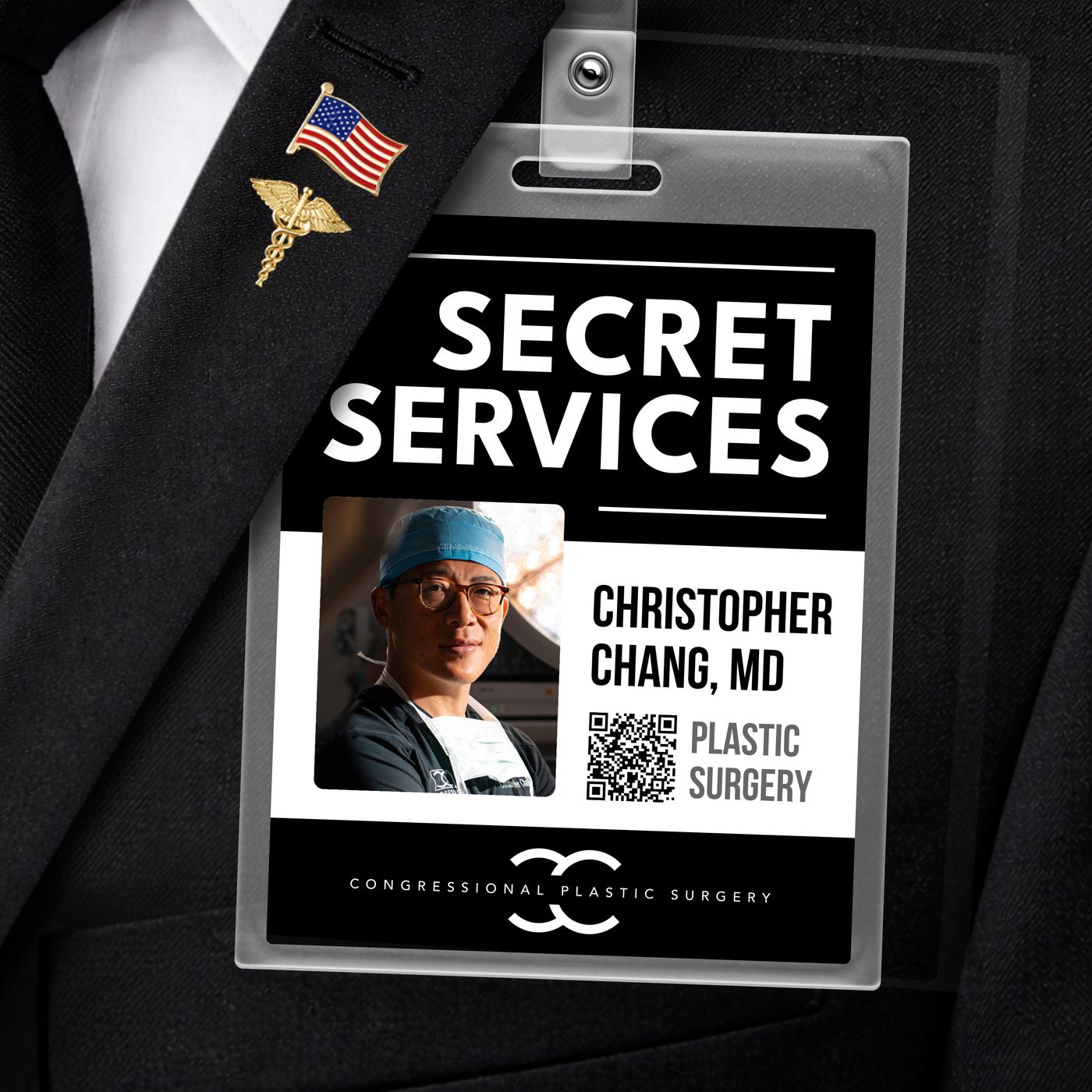


A Florida plastic surgeon representing himself in court asks a prosecutor to climb into a trash bag, and the clip goes viral. Carey brings the true crime, Jackie brings the questions, and Dr. Christopher Chang asks what it says about how people choose who operates on them.Tomasz Kosowski’s guilty verdict in the 2023 killing of attorney Steven Cozzi leads off a roundup of impostors: a Colorado med spa operator indicted for allegedly posing as a plastic surgeon, a fake PA using someone else’s credentials, and a Beverly Hills party injector who only took cash. Dr. Chang answers a listener who found a post-op lymphatic massage therapist on Instagram with hundreds of five-star reviews, and explains why “post-op” is the part that matters. Plus: whether a surgeon’s personality counts, and what Quad A’s new med spa accreditation could change.ABC News, Florida plastic surgeon found guilty of murdering missing lawyerDenver Gazette, Jeffco man allegedly posed as doctor, performed cosmetic procedures
HOSTS
Jackie O'Brien RN, BSN, CNOR
Clinical Director at Cedar Lane Surgery Center
With 12 years of OR experience and training at Georgetown University Hospital, Jackie brings expert-level knowledge in plastic, trauma, general, vascular, and ophthalmic surgery. A proud George Mason alum and CNOR-certified perfectionist, she leads with passion, precision, and a love for all things surgical. Off the clock, she's exploring new restaurants, hitting concerts and wineries, or hanging out with her cat—Biggie Smalls, the real boss at home.
Carey McLaughlin
Licensed Master Esthetician
With a Bachelor of Science degree from Frostburg State University and a Master Esthetics education from the Esthetic Institute in Vienna, VA, Carey brings both clinical knowledge and hands-on expertise to her role as Master Aesthetician. Since joining the practice in 2019, she's been dedicated to helping patients feel confident and cared for—whether through customized skincare treatments or supporting them before and after surgery. When not in the office, you can find Carey in a Pilates class or catching up on the latest reality shows on Bravo.
Christopher Chang, MD
Plastic Surgeon
Considered to be one of the top plastic surgeons in DC, Dr. Chang specializes in facial and breast augmentation surgery and has acquired several advanced degrees and training from some of the most selective universities in the country.Double board certified in plastic and facial plastic surgery, with specialized experience in facial surgery and pediatric reconstruction, Dr. Chang prioritizes precision over trends and thoughtful care over pressure. Based in Washington, DC, he serves a diverse community, respecting each patient's preferences for discretion, communication, and natural-looking results.
About Secret Services
In DC, everyone has secrets — especially when it comes to cosmetic surgery. Plastic surgeon Dr. Christopher Chang and his sharp-witted team see everything and say nothing — except on this podcast, where every week you'll get answers to confidential patient questions. Because in an era when aging gracefully and looking natural is easier than ever, it all depends on who you know—and what they're willing to tell you.
Links
Learn more about Washington, D.C. plastic surgeon Dr. Christopher Chang
Follow Dr. Chang on Instagram @dcplasticsurgeon @congressionalplasticsurgery
And on TikTok @congressionalpsurgery
Host: Christopher Chang, MD
Producer: Eva Sheie @ The Axis
Assistant Producers: Mary Ellen Clarkson & Laura Mayusa
Engineering: Victoria Cheng
Theme music: Harry's Perfume - Harry Edvino
Cover Art: Dan Childs
Secret Services is a production of The Axis: theaxis.io
Dr. Chang (00:00):
You can go with randos on the internet to say who has a good big following or who has a lot of reviews, but all that stuff can be -
Jackie (00:06):
It can be fake.
Dr. Chang (00:07):
Fake. It can be just marketing, essentially, cheap marketing. In fact, you can just buy those reviews or likes or whatever. You are listening to Secret Services where we discuss the procedures nobody admits to, but everyone's curious about. I'm your host, Dr. Christopher Chang. I think we find that a lot of times with the patients who are, they're very nice and then you kind of see what's behind the curtain at home when they bring whoever with them to the surgery center that you just like, well, what's this dynamic like at home?
Jackie (00:44):
Yeah. Not good.
Dr. Chang (00:46):
Anyway, we're back with another episode of Secret Services podcast. I'm Dr. Chang.
Jackie (00:52):
I'm Jackie.
Dr. Chang (00:53):
And I'm Carey.
(00:54):
So Carey, welcome back. Glad to have you in on the episode today. So what are we going to talk about?
Carey (01:02):
My favorite, true crime.
Dr. Chang (01:05):
You're always the expert.
Carey (01:06):
I'm the expert. I know all about it. So this week in True Crime Plastic Surgery edition, we have a convicted murderer who is an Ivy League educated plastic surgeon, another man accused of posing as a plastic surgeon and a fake injector who got caught because she called the DMV for help. It's a true crime episode and every one of these stories comes back to the question, do patients ask enough to the plastic surgeon.
Dr. Chang (01:31):
It's always got to be an Ivy League guy or something.
Jackie (01:35):
They're making you look bad.
Dr. Chang (01:36):
It's just a target all the time. When I was in school, you do one thing dumb, they'd be like, "Oh, and you go to Harvard?" And people would just constantly make fun of you.
Jackie (01:49):
It must be so hard.
Dr. Chang (01:50):
We're used to it.
Jackie (01:51):
It must be so hard to go to Harvard.
Carey (01:53):
Yeah.
Jackie (01:54):
So a lot of what happens, these people are going to see surgeons, injectors, and they're not exactly who they say they are. So if you're looking for a cosmetic provider of any kind, what do you think is the fastest way to know if the person in front of them is who they say they are?
Dr. Chang (02:11):
It's a good question. I think that there's a lot of misinformation out there. I think people can represent themselves any way they want. And so the Board of Plastic Surgery and the American Society of Plastic Surgeons is always emphasizing the credentials, the education, the background, and they really want their members to advocate for themselves to say, "We are really the specialists and the experts in plastic surgery." So that's why you as the consumer, the patient should look for these certifications and things like that. But it's not impossible for people to just say, oh yeah, I'm a plastic surgeon, or oh yeah, I do this or I do that. And people just kind of take their word for it. So that distinction is a thing that we actually have to work at to prove to people that it's meaningful.
Jackie (02:54):
And I know for the American, what is it, Board of Plastic Surgeons, you can look people up online. You can verify that someone is board certified.
Dr. Chang (03:04):
But the website is not particularly prominent. It's not like everybody's visiting. The website's like a regulatory board. They don't have a marketing budget or anything like that. There is a credentialing agency. So it's not the most popular website, I'm sure.
Jackie (03:18):
Well, I think what's tough now too is when you Google anything, now it gives you the AI results before even the Google results and it just pulls stuff from other websites. So someone could be claiming they're board certified and I feel like you could even get that AI generation. Yeah, they're board certified, but really it's just pulling it from their website. There's no actual, the AI is not verifying that. So I think that's a little scary.
Carey (03:41):
But also too, it's like we know what board certified is, but -
Jackie (03:46):
Most people don't.
Carey (03:46):
Most people don't even know what it means and what it takes to become board certified. So they're just like, "Oh, look at this guy's results. I'm going to go to him."
Dr. Chang (03:56):
Well, it's interesting. Dr. Jenny is doing her board exams now and it's a huge deal. I mean, she's collecting cases, surgeries, records for two years essentially and prepping and that's all after all the education that she did. So she'll probably come back on another episode and talk about that experience because that's fresher for her. But it's a huge amount of work.
Jackie (04:16):
It's rigorous.
Dr. Chang (04:17):
Yeah. It's extremely rigorous, extremely stressful because the idea of the board is for safety. But I mean all sorts of things, like aesthetics and aestheticians, there's regulatory boards and stuff like that. You have to go through accredited programs, right?
Carey (04:30):
Yeah. But for stuff like aesthetics, each state is different. Which is crazy because Maryland, DC and Virginia, they all have different rules and regulations. So whereas here in Virginia, I did the master's program, but if I were to work in Maryland, it wouldn't even matter because Maryland doesn't acknowledge a master program. So it's so interesting and I don't know if it's different between state to state, board certified or it's just across the board on you guys nationally. It's the same thing.
Dr. Chang (05:04):
But can you go to a different state as a Virginia educated aesthetician and practice there or do you have to reapply for a different licensure?
Carey (05:12):
I think in Virginia I did the most hours needed. So I could go anywhere, but I would have to apply and I guess get -
Jackie (05:21):
Usually pay some money.
Carey (05:22):
Yeah.
Dr. Chang (05:23):
But are there people that go to and say, oh, I'm an esthetician and they're really just not as educated or they just kind of watched how other people do it and are doing facials and skincare treatments and it was basically cosplaying being an esthetician. Does that happen? Have you heard of that?
Carey (05:42):
I know a girl who apparently was working at a spa around here and said she was an esthetician and I think she had completed school. I just don't think she completed her boards and didn't get a certification and they ended up -
Dr. Chang (06:01):
Finding out.
Carey (06:01):
Yeah, finding out and then you have to... I mean, it's illegal.
Dr. Chang (06:06):
Yeah.
Jackie (06:06):
All right. Well, we'll get into this segment. Here's an anonymous question. "I found a woman on Instagram who does post-op lymphatic massages and comes to your house for half of what my surgeon's office charges. She has hundreds of five-star reviews. My surgeon's team wants me to come in instead, but it's a 90-minute drive and I can barely sit in a car. Is it really that risky to let her come to me?" So Dr. Chang, what can go wrong if the lymphatic massage therapist isn't trained properly to do post-op lymphatic massages?
Dr. Chang (06:36):
Right. So post-op is a key differentiator, I think, in this scenario because you're already in a vulnerable state. You're healing, you have incisions, there are things going on under the skin that are not the baseline and healed version of yourself. So if you're getting a lymphatic massage and you're just getting the massage for the sake of the massage, that's one thing. But if you have sutures, if you're healing, if you have drains, maybe, the person who's doing it has to be comfortable and understand what they're dealing with. If they're massaging too vigorously, they could cause bleeding under the skin. If their technique is not clean or they're not aware of things to be watching out for, they could introduce infection, they could hurt you. It could just be painful and they don't really know why because they don't understand the surgery. I definitely think having somebody who's got experience, who's recommended by the medical practice who they work with or can at least communicate with if they're concerned is a huge advantage to going to somebody you trust. So that's a important distinction, I'd say.
Carey (07:37):
Yeah. And we try to make it as convenient for our patients. So we recommend one in Virginia, one in Maryland. But we do have people that come from other states like Southern Maryland where even if the place is Maryland, it's still a two-hour drive. So yes, we do say it's good to get them, but yeah, you definitely want to make sure they've had practice with post-surgery lymphatic massage.
Dr. Chang (08:05):
The other thing is that lymphatic massage I think has become a popular post-op treatment in the past maybe five, maybe seven or eight years. But really before that was not that common. And because of social media, everybody thinks, oh, this is such an important treatment, so great. And they show a lot of things that are done overseas or people getting these massages create this great shape and stuff like that. But if you don't get it, you also heal fine, heal well. And so these are just things that we're getting more sophisticated with. But the problem is that social media, especially if you find somebody online, yeah, they have great results, but it's not all the massage. A lot of it is the surgeon, a lot of it's the patient and those circumstances.
Carey (08:48):
And also not all surgeries necessarily need it. I have breast augs that are like, "Well, what about massaging?" And I'm like, "There's no need.You're okay."
Dr. Chang (08:58):
Don't over complicate it. Don't make it more complicated than it needs to be.
Jackie (09:01):
I try to tell everyone that in recovery, don't worry about the massage after a breast dog, but people just read online and it's hard to get that out of their head. I think for this patient, it's like us, we try to do our best to recommend people close to us. If it's impossible for this patient, I think she just needs to ask the lady the right questions. Do you do actual post-op lymphatic massages? And maybe I would recommend this patient reach out to their patient care coordinator maybe, "Hey, could you just look at this lady's website quickly and just let me know, does this seem legit as an option since your office is so far away?" So it's like we can try to help out. But yeah, I think just asking the right questions and making sure someone's as legit as possible. It's a little different for a post-op lymphatic massage though. It's not really the same as looking up a doctor or a nurse. It's a little...
Dr. Chang (09:56):
Yeah, it's kind of hard because I don't think it's really regulated the same way. That's why you have to go with references of who your practice or your doctor has worked with before. You can go with randos on the internet to say who has a good big following or who has a lot of reviews, but all that stuff can be -
Jackie (10:14):
It can be fake.
Dr. Chang (10:15):
Fake. It can be just marketing essentially, cheap marketing. In fact, you can just buy those reviews or likes or whatever and it can be cheap marketing. So it's real important, I think, to go with true word of mouth from somebody you trust, like maybe even the nurses in the surgery center or the recovery room, or who do we often discharge patients to for postoperative care? All right. I'm good.
Jackie (10:38):
All right Carey, take us home with our guy.
Carey (10:42):
Dr. Kosowski. So September 23rd, Florida judge found former plastic surgeon, Dr. Kosowski, guilty of first degree murder in 2023 killing of attorney Steven Cozzi, who represented the defendants in a lawsuit. Kosowski fired over bad online review and a medical billing dispute. Prosecutor said Kosowski attacked Cozzi in the law office bathroom before a scheduled conference call and wheeled him out in a wagon. Cozzi's body has never been found. Kosowski is represented by himself in a bench trial and now faces life in prison or death penalty with a hearing set for October 8th. So I of course love it. I see it on New York Post. I've been reading all about it. I told Jackie, I was like, "Rookie move, you killed him right before a scheduled meeting." What? Come on.
Jackie (11:37):
There's literal -
Dr. Chang (11:38):
Wasn't he in the office? Yes. In his own office?
Carey (11:41):
Yes.
Jackie (11:42):
There's literal footage of him wheeling him out in the wagon.
Carey (11:46):
Blood was found.
Dr. Chang (11:47):
Yeah, bringing him back in a trash bag or something, wheeling up this bloody trash bag dragging out of the bathroom.
Carey (11:52):
And the best part is, as I mentioned, he defended himself in this trial. He asked, I believe, one of the prosecutors to get in the trash bag, be like, "Can you put yourself in this trash bag to see if it's..."
Jackie (12:08):
His only defense was that like, "Oh, well, there's no way I could have lifted this body and it fit in this trash bag and then me throw it in the back of my car and basically told the lawyer, will you try to get in it?" And that clip went viral.
Dr. Chang (12:26):
He must be totally, I mean, he must have some sort of mental illness or something. I mean, to think that this would be a good idea is nuts. It's nuts.
Jackie (12:36):
I mean, yeah. And then what does that say for his confidence in an OR? I mean, I would love to hear stories of people that have worked with this guy.
Dr. Chang (12:45):
This reminds me of Dr. Death, honestly. Somebody who is so confident that they're right, and even when they're obviously hurting other people, or in this case, hurting his own legal case, just so blinded by the confidence in narcissism that he just has no idea what's happening around him.
Jackie (13:04):
Such a God complex.
Dr. Chang (13:05):
Exactly.
Carey (13:06):
You can't find the body, so therefore you can't convict me.
Dr. Chang (13:11):
I mean, he's the hubris. I mean, the arrogance when he was like, "Oh yeah, I'll just defend myself knowing nothing." I mean, that's a terrible thing to do, I think. I don't even know why they even give that an option you can defend yourself.
Jackie (13:24):
I know. I just watched another documentary where the lady represented herself and I was like, How would you.. you don't know what to do.
Dr. Chang (13:32):
It's a total waste of time. You may as well just plead guilty.
Jackie (13:34):
Yeah. We didn't study that. You don't know how a normal trial goes down.
Carey (13:40):
Even an attorney who studies or attorney who works in -
Dr. Chang (13:45):
Trial law.
Carey (13:46):
Trial. Yeah, that's completely different from a corporate attorney. They wouldn't know how to defend themselves.
Jackie (13:51):
Even just the jargon. How would you know what you're supposed to do next?
Dr. Chang (13:54):
And the procedures. And I heard that he actually waived his right for a jury trial.
Carey (13:59):
Yeah, it's a bench trial.
Dr. Chang (14:01):
Yeah. Yeah. Yeah. So I don't know if that's good or not, but he's not convincing anybody, especially once the judges hear this, he's like, "Okay, this guy judge already probably decided."
Jackie (14:12):
He also offered no evidence on his own. The only thing that he was standing on was when he asked the guy to get in the trash bag. He had nothing else to say. Right.
Dr. Chang (14:21):
And he's like, "Do you think I could lift you into a truck or something?"
Jackie (14:24):
Right. And it's like, despite knowing that all that other stuff was on camera, he still was denying. And the fact that it was over bad reviews and a billing dispute.
Carey (14:36):
Yeah.
Dr. Chang (14:37):
Oh, it's just so sad and inappropriate. It sort of speaks to how short-tempered and crazy we get over these little things and how they spiral out of control, like road rage. People get so upset about being cut off or other things like that. It's sort of like, wow, you really let your emotions go.
Jackie (14:56):
Yeah. I'd love to know also what's going on in Kosowski's home. Is he going through a divorce or something? Is something else not right? Because obviously this is not a normal reaction. But I do wonder, one, what's going on at home? Two, I don't know much about him as an actual surgeon. Does he have a failing practice? Does he have many bad reviews? And this was just like -
Dr. Chang (15:21):
Or is he an amazing surgeon that everybody loves? I don't know.
Jackie (15:24):
I don't know.
Dr. Chang (15:24):
Maybe he's the life of the party.
Jackie (15:26):
I mean, this guy was very viral. I didn't see anyone defending him. Oh, he was my surgeon and I loved him. So it is interesting. How much do you think a surgeon's personality and temperament matter when you're choosing who operates on you? I wonder, could this guy just turn it on? I think that's what's scary about people in general. Sometimes they can just put a mask on or was this guy a little off?
Dr. Chang (15:47):
Yeah, I think there are a lot of surgeons who are very arrogant or confident, and I think that's partly because of what we do requires a certain degree of confidence and a certain degree you have to be sure that the plan that you're doing, especially when you're going to cut somebody, that you're going to be able to heal them. It's for the right reasons and they'll be better off. So some of the decision making kind of lends itself to make you feel that you have to demonstrate you're sure and you're confident that you're making the right decisions when you're in the operating room. So it does kind of lend itself to that I think a little bit, but obviously there's a degree of confidence that goes into arrogance or blind hubris and things like that.
Jackie (16:29):
It is tough because there are a few surgeons that I've worked with in the past that I would say are more difficult, don't have the warmest bedside manner.
Dr. Chang (16:38):
Craniofacial surgeon perhaps.
Jackie (16:41):
But I love him.
Dr. Chang (16:42):
Yes. Abused. Like a battered scrub nurse.
Jackie (16:47):
Yes, yes. There are some of those, but there's some where a friend will ask me about a surgeon and they'll be like, "Well, I met him and he was a total ass." And there are some where I'm like, "He kind of is, but he's also a really good surgeon." So I really, as the patient, you got to go with what feels right to you. If you meet someone and the personality just is not matching, you're like, "I don't want this guy to..." When you pick a surgeon, it's not just a surgery, it's the follow-ups, the post-op care, everything. So if you're really not jiving with someone, listen to your gut. But sometimes there's not the warmest doctor, but they're really good at what they do.
Dr. Chang (17:28):
I mean, that's okay too. I mean, you don't have to love... If you don't get along with a doctor, could you trust them to make critical decisions for you? It seems a little scary to me. I think you got it. There's other doctors out there and you're not going to get along with everybody. You're not going to match with everybody. So if it isn't, it's nothing personal, not everybody's compatible. It's okay. And then even though you may have gotten a recommendation, "Hey, see this surgeon for this issue." Yeah, it didn't work for us, so I'm moving on. No hard feelings. I think sometimes, especially physicians and doctors, they feel like they got to match with every patient and say, "I can do this and this for you." But if it doesn't work out, the patient also, patients are so different. If it's not a good match, then we should do this.
Jackie (18:14):
Especially for elective surgery, you know what I mean? Yeah. You are choosing to have the surgery, you're choosing your surgeon, so pick what feels right to you.
Dr. Chang (18:24):
All right. Well, wait, there's a bonus true crime tidbit to it. So the past couple of weeks also brought us a Colorado man indicted for posing as a plastic surgeon. A fake PA arrested 17 years after a fatal silicone injection, an unlicensed nurse selling post-op care on Instagram, and a New York woman who died after an NAD shot from a phony doctor. So the fake PA, I guess, used somebody else's credentials. The Colorado Med Spa had a licensed doctor as a co-owner. So how do imposters hide behind real licenses? This is kind of getting along to what you were saying, Carey.
Carey (19:04):
Well, I was just going to say, I watched a show the other night and it was basically talking about how Lionel Richie's ex-wife, this was early 2000s, she had met this doctor who was licensed in another country. He came to Beverly Hills. He met Lionel Richie's wife at the time. So she was super prominent in the Beverly Hills it circle. She started having these parties at her house where this doctor would come, he would inject... It wasn't Botox, it wasn't filler, but basically she said this is the new thing. And so he kept injecting. All these women would come to him and other celebrities also came because they were friends with this woman. And sure enough -
Dr. Chang (19:55):
Cooking oil or something?
Carey (19:56):
It was something... Oh my gosh, what was it? It was something crazy and it started to decay people's skin. And basically this doctor was making hundreds of thousands of dollars and he would... Number one sign, they only take cash. And eventually they found his stash of stuff and yeah, they tested it and turned out it was just something that I wish I could remember exactly what he was buying. But it ended up he went to jail, people were disfigured. Somehow Lionel Richie's, I can't remember her name. She got away unscathed or something, but it happens so often and I think you just have one person, one prominent person being like, oh, this is -
Dr. Chang (20:48):
Endorsing it. The talkative one in the friend group.
Jackie (20:51):
And then you're like, "Well, I trust her, so of course."
Dr. Chang (20:54):
But this kind of thing can happen in a place like Beverly Hills where people think, "Oh, only the best go to Beverly Hills." Yeah, but there's a lot of scammers. There's a lot of money means there's also a lot of targets and a lot of people can get the wool pulled over their eyes and they think, "Oh, it's the latest and greatest." Or, "Oh, this person's a movie star. They would never be fooled." Everybody could be fooled by a scammer. Look at Bernie Madoff. He scammed all these very rich, wealthy, prominent people in New York and around the country. I mean, anybody can get scammed. So I think that just because a person who lives in Hollywood or a celebrity is victimized doesn't mean that it can't happen to you.
Jackie (21:33):
Well, Carey made a good point. I think red flag cash only. I think getting any injections out of a home is also a little sketchier. This vacay using someone else's credentials. I know if you're going to a reputable facility for our surgery center, there's a way to verify credentials of surgeons, anesthesia providers. So if you're going to a facility that's accredited and doing their due diligence, that's a part of being accredited is you have to basically do background checks, run through the system to see if this person is actually credentialed. This database that we have access to will also show any legal things that they've gone through. So if you're going to a place that's accredited properly, these things should be done. I know a lot of med spas are not, and I'm on the emails with Quad A, and Quad A just added a med spa accreditation.
Dr. Chang (22:37):
Oh, really?
Jackie (22:38):
Which is new. So hopefully more places will go after getting that so that you know that you're going to a legit facility. But I think a lot of med spas aren't as regulated, so that's why you have to be more careful.
Dr. Chang (22:51):
Yeah. Interesting. Oh, that's interesting that they're going to get into that. I didn't know that they would do that. All right. Well, anyway, be safe out there after all these fake nurses, doctors, and PAs. So we just got to be safe out there, check everybody's credentials. And if you want to learn more about what makes us qualified, we'd love to speak to you about anything that you're interested in from aesthetic treatments to surgery, and we'd love to keep you safe. So drop a comment below, follow us for more, and we'll see you next time.
Carey (23:21):
Bye.
Dr. Chang (23:24):
Thanks for listening to Secret Services, the podcast where we see everything and say nothing except right here. I'm Dr. Christopher Chang, double board certified plastic surgeon located in Tysons, Virginia. Follow us on TikTok @congressionalpsurgery or on Instagram @congressionalplasticsurgery. To send us a classified message or to hear more episodes, go to secretservicespodcast.com. Links to everything we talked about on today's show are available in the show notes. Oops, patient's here. We got to go.