The Truth About GLP-1s (From a Plastic Surgeon Who Did It)


Everyone has an opinion about GLP-1 weight loss drugs. Fewer people understand what medications like semaglutide and tirzepatide actually do.
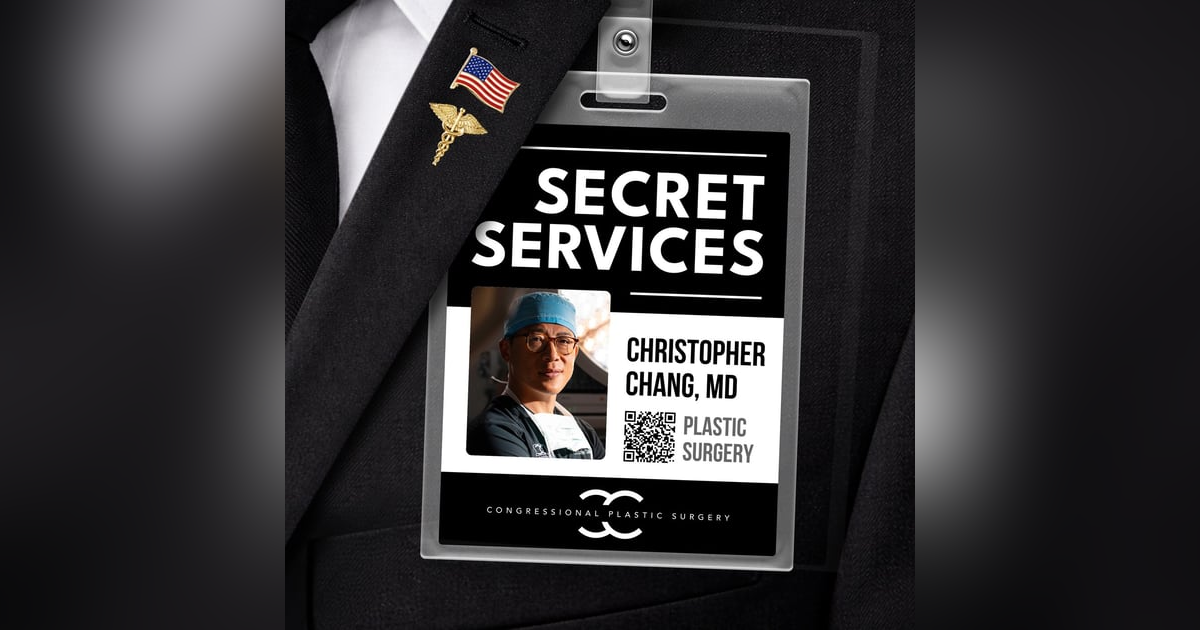
D.C. plastic surgeon Dr. Christopher Chang and clinical director Jackie discuss how these medications work, what it’s like to be on them, and how rapid weight loss can change both the face and body.
Reddit, Oprah Winfrey says she will have to be on GLP-1s for life after trying to "beat the medication" by stopping for 12 months and gaining back 20 pounds
HOSTS
Jackie O’Brien RN, BSN, CNOR
Clinical Director at Cedar Lane Surgery Center
With 12 years of OR experience and training at Georgetown University Hospital, Jackie brings expert-level knowledge in plastic, trauma, general, vascular, and ophthalmic surgery. A proud George Mason alum and CNOR-certified perfectionist, she leads with passion, precision, and a love for all things surgical. Off the clock, she’s exploring new restaurants, hitting concerts and wineries, or hanging out with her cat—Biggie Smalls, the real boss at home.
Christopher Chang, MD
Plastic Surgeon
Considered to be one of the top plastic surgeons in DC, Dr. Chang specializes in facial and breast augmentation surgery and has acquired several advanced degrees and training from some of the most selective universities in the country.
Double board certified in plastic and facial plastic surgery, with specialized experience in facial surgery and pediatric reconstruction, Dr. Chang prioritizes precision over trends and thoughtful care over pressure. Based in Washington, DC, he serves a diverse community, respecting each patient’s preferences for discretion, communication, and natural-looking results.
About Secret Services
In DC, everyone has secrets – especially when it comes to cosmetic surgery. Plastic surgeon Dr. Christopher Chang and his sharp-witted team see everything and say nothing — except on this podcast, where every week you'll get answers to confidential patient questions. Because in an era when aging gracefully and looking natural is easier than ever, it all depends on who you know—and what they're willing to tell you.
Links
Learn more about Washington, D.C. plastic surgeon Dr. Christopher Chang
Follow Dr. Chang on Instagram @dcplasticsurgeon @congressionalplasticsurgery
And on TikTok @congressionalpsurgery
Host: Christopher Chang, MD
Producer: Eva Sheie @ The Axis
Assistant Producers: Mary Ellen Clarkson & Hannah Burkhart
Engineering: Chris Mann
Theme music: Harry’s Perfume - Harry Edvino
Cover Art: Dan Childs
Secret Services is a production of The Axis: theaxis.io
Jackie (00:00):
All right, Dr. Chang. Tell us something that people don't know about you.
Dr. Chang (00:06):
Well, there's a lot of things people don't know about me, but things that I've done are always interesting as a plastic surgeon or somebody in medicine. So I always tell a lot of patients that I have done GLP-1s.
Jackie (00:20):
Okay.
Dr. Chang (00:21):
So I've done the weight loss thing and it's been awesome. It's so cool. Everybody likes to lose a little bit of weight and if you can control it and lose the weight that you've been trying to lose for a little while that's been stubborn, it's great. So I think it's really been an incredible innovation in medicine. And I think it's now the number one medical therapy in America really. So you have friends that have done it?
Jackie (00:56):
Yep. I have friends that are on it and they all have amazing success. I would say one of the big things I hear is the nausea. Nausea, would you say that that is something to be a barrier to people looking to do it? Or how do you deal with that?
Dr. Chang (01:15):
So I started out and I remember the first or second dose, immediately I felt the effect. So even with a micro dose, it was just sort of like I had just had Thanksgiving dinner when I have a meal and you just cannot put anything more down. You're like, I am full and I don't really want to see any more food or try to force anything down because if I do, I would feel nauseous or it's just gross feeling. But that's with half of a plate. Normally I would finish the whole plate or if there was some extra whatever side dish that you really wanted, those extra fries or those extra-
Jackie (01:52):
Warm mashed potatoes.
Dr. Chang (01:53):
Yeah, exactly. Going by Thanksgiving, right? So extra cranberry sauce, something like that. So it really helped me in the beginning sort of just feel like, okay, it's definitely enough. I've had enough that I'm okay. So it was kind of a cool feeling actually to sort of say, "This is what satiety feels like. This is what fullness is like. And I know you're good."
Jackie (02:16):
Yeah, because I think people would look at you and they'd be like, "Why are you on Ozempic?" You're not morbidly obese. I think people, especially when it first came out, people were like, "Oh, really, really overweight people that don't necessarily want to have a gastric sleeve or something would turn to it. " But I think it's interesting to know that people like you are taking it just curb the appetite and lose those last couple pounds or just don't snack all day or something like that.
Dr. Chang (02:51):
Right. I think that you can use any medication or abuse a medication. And so if you try to have a realistic goal, have a healthy relationship with food and your weight, everybody in America could say, "Oh, if I could just kick that last five pounds, that last 10 pounds," it's reasonable.
Jackie (03:11):
Right.
Dr. Chang (03:11):
It's reasonable. So you just have to recognize what is realistic and stay healthy, of course, do it under the guidance of a physician provider and PA, somebody who really going to help you achieve your goals and keep you out of trouble. But it's really been awesome. I'm not continuing to lose weight, but I am pretty stable and I do really like it. And many of people I work with, of course in the office, patients, friends have been on it and it's really great. And going back to the side effects question of nausea, I would say that the second generation, the Mounjaro and Tirzepatide variant is a little bit less-
Jackie (04:02):
Oh, interesting.
Dr. Chang (04:02):
...side effects I think. It's all anecdotal. Some people have, some people don't, but I think it's overall less.
Jackie (04:11):
Very interesting, Dr. Chang, with this little secret. So here's a question that you probably get all the time in your consultations. How long have you been doing this?
Dr. Chang (04:25):
So yeah, so I've been doing the Ozempic thing. I remember it was April, it was right before Easter. It must have been 23.
Jackie (04:34):
So before I met you.
Dr. Chang (04:35):
So that's why-
Jackie (04:37):
I've only known Ozempic, Dr. Chang.
Dr. Chang (04:40):
You're so skinny and svelte I got to come work with you.
Jackie (04:43):
Yes, that was why.
Dr. Chang (04:46):
Yeah, that must have been then because I remember seeing actually some news ... I remember seeing a news story in the doctor's lounge at Alexandria or Mount Vernon Hospital about Ozempic thinking, "Oh yeah, I'm going to try that. " So I've been doing it for a couple of years. I lost a lot of weight initially. By a lot, I mean like 15 pounds, 10 pounds, 15 pounds, something like that. And then I've been
Jackie (05:15):
Pretty significant.
Dr. Chang (05:16):
Pretty steady state. Yeah. I mean, at my heaviest, I was like 185 or 190 and at my average was somewhere in like the 180s or 175, something like that. And at the lowest, I was in maybe the mid 160s, like 165, which I hadn't been since I was in high school.
Jackie (05:40):
Yeah.
Dr. Chang (05:41):
So I was like, whoa. And so that part was really, it's really good. So I think that right now I'm somewhere in the middle. I don't try to lose more weight. I'm not trying to increase the dosing or anything like that, but the clothes fit a little bit better. You feel a little bit more in shape and you don't feel as self-conscious, I guess, about being a little heavier than you feel you should be. So as I said, everybody wishes they could lose a couple pounds.
Jackie (06:10):
That's awesome. So yeah, what advice do you give to patients when you're telling them about this awesome drug that you've tried?
Dr. Chang (06:19):
So I tell patients, one, it's not a miracle. You're not going to just lose weight without trying. You have to have a very conscious plan of, okay, I'm going to try to be good, eat healthy food, make sure you're taking in enough calories and protein and having somewhat of a nutritious diet. You can't just take this and eat candy bars and be like, "I'm going to lose weight." You have to be smart.
Jackie (06:45):
Yeah.
Dr. Chang (06:47):
Of course, exercise will help accelerate that because you're burning more calories and then you're taking in fewer and also you're maintaining some muscle mass that will also help significantly. And then I think that patients also have to be prepared. If you lose a lot of weight, you're going to have some side effects of rapid weight loss or if you lose weight very, very fast. So whether that's through surgery, like gastric sleeves, bypass, open surgery, lap band, or it's with Ozempic, losing weight fast affects your body. So you have to be prepared for that. And of course, the amount of weight that you lose, if you lose 80 pounds, you're going to have loose skin.
Jackie (07:38):
Yeah.
Dr. Chang (07:39):
It's not realistic to be like, "Oh, I'm not going to have loose skin."
Jackie (07:42):
Right. Exactly.
Dr. Chang (07:44):
Did you ever work with anybody who's like a weight loss surgeon or anything like that? Did you ever do it?
Jackie (07:49):
I did. I did. At Reston, we did bariatric surgery. So when I was there, the lap band was kind of like a thing of the past. I don't know if they're doing the band that much because I think weren't they saying people were like, you could basically eat through the band or like it would like expand more.
Dr. Chang (08:10):
I remember in medical school doing some studies on the lap band patients, but I was only a student, wasn't doing the surgery, I wasn't a resident in that. So I'm not sure exactly what the outcomes were like. We were comparing the lap band to what's called a biliopancreatic duodenal switch procedure where you're opening it up and doing a much more invasive gastrointestinal surgery.
Jackie (08:34):
Yeah. We would do like the Roux en Y, and then occasional sleeves. And then they started doing them robotically, which was pretty cool.
Dr. Chang (08:42):
Right. So if you think about that, right, what is the stomach? The stomach is a bag and if you put a tourniquet or think of like a dog collar or a belt or something around the bag so it can't fully open, that's the concept of the lap band. You make a small laparoscopic incision, you just wrap a little band around it so it can't fully open and you'd think, "Okay, you're not going to eat as much." And then similarly, like stomach stapling, people would say, "Okay, let's just cut off part of the bag, staple it close so it's a smaller bag and then people will lose weight because the stomach can't hold as much or you'll vomit especially because you've eat too much and the stomach can't hold it. "
Jackie (09:24):
Comes back up. Yeah.
Dr. Chang (09:26):
Gross, right?
Jackie (09:26):
So gross.
Dr. Chang (09:28):
I know. Tell us how you really feel about vomit. I know.
Jackie (09:31):
Not a fan, not a fan.
Dr. Chang (09:31):
I know. That's like your-
Jackie (09:33):
Vomit and secretions.
Dr. Chang (09:35):
Gross.
Jackie (09:35):
A no for me, doc.
Dr. Chang (09:38):
I know. That's a bad feeling.
Jackie (09:40):
It is.
Dr. Chang (09:41):
But that's a bad feeling. I know that's your kryptonite, your anti-vomiting.
Jackie (09:46):
Anti-puke. I will hold it in.
Dr. Chang (09:50):
Yeah, but I think that conceptually what the GLP-1 medications do is they sort of slow the whole digestive system, so just not emptying as fast, so you don't get hungry again as quickly, and you maintain that feeling of fullness a little longer, and things go through slower. But with that, you can get, of course, the nausea on the top side of things, and you get the little constipation or something on the bottom side of things, so things don't move through as quickly. For people out there, they should be thinking conceptually, this is just slowing the system down so you don't feel like you have to eat again and fill it back up, I think.
Jackie (10:34):
Interesting. Well, while you were discussing that, it made me think of with our patients that are on these GLP-1s, we do have them stop before surgery. And the reason, if you could explain.
Dr. Chang (10:49):
Yeah. So I mean, this is also a good controversial topic because we're changing all the time.
Jackie (10:56):
All the time.
Dr. Chang (10:57):
But if you think about, one of the things we worry about in surgery, whether it's plastic surgery, OB- GYN surgery, any kind of surgery where you're going to go to anesthesia, you're going to go to sleep, you're going to relax, they're going to relax your body and they're going to put a breathing tube or blow some oxygen through your throat and help you breathe into your lungs. The biggest problem or the risk that comes up initially is the risk of vomiting. Here we are back to vomiting.
Jackie (11:29):
Yeah. All roads lead back to vomiting.
Dr. Chang (11:32):
Yeah. So the problem is if you vomit or you have spit up or regurgitation, all those stomach contents could go into your lungs and then you could essentially asphyxiate or aspirate and have a liquid product. It's like drowning essentially in your lungs and then you wouldn't be able to exchange air and it's very dangerous. So that's why the anesthesiologists in the hospital and the surgical center and the nurses always tell you don't eat anything the night before surgery so that even if you're not having full general anesthesia in the case of possibility that they need to put something in your airway to protect you, that it's lower risk for any kind of complications. So let's unpack that a little more and rewind to if you're taking GLP-1s. Well, if you're taking GLP-1s, your gastric secretions, your stomach acid, the food that you had for dinner may not pass through as quickly as it would if you were not. And so if it's sitting there all night and you normally would have cleared that out in eight hours, but you're taking the GLP-1s and it doesn't clear out for 12 hours or 16 hours, there still may be stomach secretions or even food products that are prone to potentially being vomited. So that's why it's really important that we follow guidelines as to how to keep your stomach as empty as possible so that's safe to have surgery.
Jackie (12:58):
Yeah. And also why it's so important for patients to be honest about everything that they're taking. So just because it's a secret from your friends, you should share it with your healthcare providers.
Dr. Chang (13:11):
That goes for everything.
Jackie (13:12):
Yes.
Dr. Chang (13:13):
I mean, the number of things that we see on the preoperative clearances that ... I'm like, wait, they never told me about that. Or various sort of secrets that the patients didn't say, "Well, I also have this or I also take this medication or supplement." I mean, it's sort of like detective work sometimes, right?
Jackie (13:34):
It really is. It is.
Dr. Chang (13:37):
I think one of our ... Nurse anesthetist was telling us a story today about somebody who did a little recreational drugs, didn't tell anybody, and she had a real bad complication over at the hospital and fortunately ended up being okay, but really they had to do all sorts of emergency measures because they didn't know she had some illicit drugs in her system and she just whe forgot to tell them.
Jackie (14:04):
Yeah, forgot. Oh man. All right. Wow. Thanks for sharing that little secret with us.
Dr. Chang (14:15):
I will tell you, it's a secret, but not a well kept secret. That summer, I remember going to a cocktail party with my wife and we were there, maybe it was a housewarming party, cocktail party or whatever. Everybody's in a nice little summer dress and shirt and tie and stuff. And there were a bunch of people I didn't know. I was just sort of, "Oh, what do you do? I'm a plastic surgeon. And you know what? I'm taking Ozempic. It's great." My wife was just mortified. She's like, "Shut up. You're oversharing." And I was like, "This is the best thing ever. Look, I haven't fit in these pants in 10 years." If it's good, I want people to know and I want to be demystified. Go ahead, do it. You'll feel good. You'll like it.
Jackie (15:00):
I love it. I love that. It's interesting that you were talking about at the party you were telling everyone, because fast forward three years later, I feel like you can't lose weight at all without people being like, "You're on Ozempic. She's got to be on Ozempic." And then now what you see all over social media is Ozempic face. So what does that even mean and what's happening there?
Dr. Chang (15:25):
So first of all, there was a section of time you're talking about that I think it was sort of taboo. It was still secretive a little bit, which celebrity's on Ozempic or it was kind of like gotcha, you got to be doing Ozempic.
Jackie (15:41):
Is she, isn't she?
Dr. Chang (15:42):
But I personally think we're now at that point like, "Yeah, of course she's doing Ozempic. You should be too. Everybody should be- "
Jackie (15:48):
Yeah, why wouldn't you?
Dr. Chang (15:49):
Yeah. What's wrong with you? Yeah, you're almost not in the know if you're always not- Yeah, if you're overweight, what do you do? It's not a big deal. It's the number one, as I was saying, the number one drug class in America. It's funny, South Park did a whole episode maybe a year ago on Ozempic. And it was amazing because it's sort of culture changing. There's so many people that go to the gym, work out, keto diet, Atkins diet, carnivore diet. This is just an evolution of that sort of. It
Jackie (16:26):
Is kind of crazy. And in that South Park episode, they were calling the other drug Lizzo. Just be happy with the way you look. And then now Lizzo's posting on social media. I don't know that she's on Ozempic, but she's actively losing weight.
Dr. Chang (16:41):
No.
Jackie (16:42):
Yes. So it's like-
Dr. Chang (16:43):
What?
Jackie (16:43):
It went from love your body to now it's like, well, time to slim down.
Dr. Chang (16:48):
Wait, there's going to be skinny Lizzo?
Jackie (16:50):
She's definitely skinnier.
Dr. Chang (16:52):
But how can you be skinny? That's like her whole identity.
Jackie (16:56):
It was.
Dr. Chang (16:56):
Big girl kind of energy.
Jackie (16:57):
But she also got canceled. So maybe she's trying to change her whole image.
Dr. Chang (17:02):
Yeah. I was going to say what I last remember of Lizzo was that she got canceled for being kind of a bully to her dancers or something.
Jackie (17:09):
Yeah.
Dr. Chang (17:10):
And then we haven't heard from her for a while. As you know, I love Lizzo. We listened to lots of Lizzo in the OR or we did when it was hot.
Jackie (17:20):
Yeah. But yeah, even she's losing weight now.
Dr. Chang (17:23):
Well, good for her. Yeah. I mean, again, it's a branding thing, I guess, or her identity, but yeah. And I mean, lots of celebrities. Meghan Trainor looked like she lost Kelly Clarkson, lost a ton of weight. She got a lot of flack for that, but she looks great.
Jackie (17:38):
Right, right. Yeah.
Dr. Chang (17:39):
I mean, yeah, okay. She lost a lot of weight, but so what? She looks great. And now that kind of that shock of, oh, her transformation is over, it's just how she is. I think people are supportive of it now.
Jackie (17:50):
Yeah, definitely. But there is that Ozempic face where you see people and their heads look too big for their body type of situation.
Dr. Chang (17:59):
Yeah. So it's got this sort of coined phrase, it's like a catch phrase, Ozempic face. But just like we were talking about before, any rapid weight loss has consequences and degrees of weight loss has consequences to your body. So when you lose a lot of weight overall, your face can look thinner. And while having a little bit of fat and fullness to your face can look more youthful, you still also look fatter in your face. And so I think that a lot of people look pretty good having lost that weight in their face, better jawline, cheekbone definitions like that. The real problem is if you're a little older or you have some sagging, then it looks a little deflated. And it's all about degrees of sagging, degrees of weight loss.
Jackie (18:58):
And then the Ozempic butt.
Dr. Chang (19:00):
Yeah.
Jackie (19:00):
Just a little-
Dr. Chang (19:01):
The Ozempic butt. I won't show you my butt.
Jackie (19:03):
You have an Ozempic butt?
Dr. Chang (19:04):
No. I just won't show it to you for your assessment.
Jackie (19:08):
Fine.
Dr. Chang (19:09):
I'll just tell you. It's all right. It's okay. I didn't get totally crushed by the Ozempic butt, but-
Jackie (19:16):
Maybe a few squats.
Dr. Chang (19:17):
Yeah. Yeah. I'll have to do squat-tober next year when we get into the fall. But I think that you can also selectively augment certain areas. For instance, in the cheeks and face, there are products, cheek face filler, you can do fat grafting to kind of like just give you a little bit more life in certain areas where like if you have a lot of weight loss, for instance, under your eyes, that can make your eyes look hollow. And that's a small area where a little bit of fat can really give you life again in that area.
Jackie (19:54):
Yeah.
Dr. Chang (19:55):
Assuming you lost a lot of weight, like if it's a really significant issue. If it's not, then you probably don't even need it at all.
Jackie (20:02):
Yeah.
Dr. Chang (20:03):
But yeah, that's a pretty straightforward way to handle it and also pretty natural way to handle it if you did fat crafting or something like that.
Jackie (20:16):
So I know you have been taking this for three years, and I think this is another question that patients ask, "If I start this, am I taking Ozempic forever?"
Dr. Chang (20:29):
So I think of it as a training aid and you can use it and it just depends on you and your lifestyle. I definitely don't feel I need to take it 100% of the time as when I was in sort of that initial phase. But that being said, if I take it through the holidays or something like that, I don't gain weight when I normally would be going out to dinner every couple times a week or going to parties or eating stuff like pie and cake and high calorie foods. It's just a little bit easier for me to manage those ebbs and flows of my own metabolism and weight. And so this is a good training aid for discipline and portion control and things like that. And so it just really depends. If you use it as a training aid or you use it to kind of stabilize yourself, it's really good. And then some people do like to use it because they like it. I mean, they like it and continue to do it, but do you have to? Absolutely not.
Jackie (21:31):
All right. So obviously we love our Reddit, TikTok. We love seeing what's going on there. So I saw this headline on Reddit and then let me just show you our dear friend Oprah here, this Reddit is Oprah Winfrey says she will have to be on GLP-1s for life after trying to beat the medication by stopping for 12 months and gaining back 20 pounds. What do you think about this?
Dr. Chang (22:14):
Oprah's a crazy situation because she was denying taking this stuff for a really long time. And Oprah has always talked about weight loss for, I don't know, it's like between her interview TV show and-
Jackie (22:30):
Yeah. I feel like Oprah was up and down. She was like Weight Watchers girl back in the day, I feel like.
Dr. Chang (22:40):
Yeah. So as I described, I had a maximum amount of weight I lost and then I settled back somewhere in between. And I think that's a very common journey. You're not going to be at the extremes of the highest weight and the lowest weight. You're going to settle out somewhere in between. The studies that I saw originally, now these are older studies because there's so much more data that's come out, but patients a year or two after stopping gained some percentage back depending on what type of medicine. So the semaglutides they gained back X percentage and then the tirzepatide, they gained back a lower percentage. So I'm not sure if that is due to how much overall they lost, what the patient profile was like, or the medication has inherent properties or things like that, that basically the patients were experiencing long lasting. But at some point if you stop, you probably will gain something back. Will it be 100% of what you had lost? Almost definitely not. But over the course of a year or two, some of that lifestyle stuff will creep and your genetic predisposition to where your metabolism and your weight should be also as a factor. So you do have to try. It's not magic like you got rid of it and it's gone forever. You have to try. So if your lifestyle does not change or you just go back to doing the things you did before you tried it, what do you expect is going to happen?
Jackie (24:18):
Yeah. Yeah. Good point.
Dr. Chang (24:21):
So overall, I think it's really great medications. I get a lot of emails about different medical studies coming out and new cancer drugs or new kidney medications or things like that, just random kind of breakthroughs in medicine from multiple different publishers and things like that. The number of things that I see coming out of this class of medications is just insane and they're all positive, lower cancer risk, lower cardiac risk, better cholesterol, lower blood pressure, higher lifespan expectations and things like that. It's crazy.
Jackie (25:01):
I saw something about how it was also like decreasing people's drinking, like binge drinking was down if they were on it, gambling. It's like almost like these addictive things were like also suppressed.
Dr. Chang (25:18):
Right. I remember actually my neighbor started on some and she was sort of like, "I had a glass of wine, but I normally would have three or four and I'm okay with my one glass of wine." Which in addition to being calories is obviously good to not drink as much. So that's kind of a cool effect to think about how it's changing our psychology and consumption of being a little bit excessive maybe.
Jackie (25:48):
Yeah. Yeah.
Dr. Chang (25:49):
So I've been really impressed with what it's done I think in terms of American consumption for like a normal patient.
Jackie (26:01):
Yeah.
Dr. Chang (26:02):
The other thing I sort of saw was something called the Twinkie study. Did I tell you about this thing in the OR the other day?
Jackie (26:09):
I might not have been there.
Dr. Chang (26:12):
It was probably on TikTok or Instagram or something.
Jackie (26:16):
I'm always like, I read an article.
Dr. Chang (26:17):
A guy who was referencing a study about somebody who had basically been eating Twinkies and ho's and junk food essentially, but lowered the total calorie intake. And essentially they lost weight, their cholesterol went down, their triglycerides and saturated fats went down, even though they're eating these horrible foods. And so it was an argument about clean eating versus calories.
Jackie (26:50):
Yeah, just a smaller portion.
Dr. Chang (26:52):
And if we could just consume a little bit less or the appropriate amount of calories, it really improves your health.
Jackie (27:02):
That's crazy.
Dr. Chang (27:03):
Yeah. I mean, he's eating processed sugar-
Jackie (27:05):
Twinkies.
Dr. Chang (27:06):
Everybody's like, "Oh, you got to eat clean, got natural farm to table stuff or organic stuff." But really, that's over complicating it. Let's make this-
Jackie (27:17):
Just eat less.
Dr. Chang (27:19):
Simple. And that's what these medications do, eat less.
Jackie (27:22):
Well, that also, on the flip side, reminds me of Tracy Morgan who said he out ate Ozempic.
Dr. Chang (27:31):
Yeah.
Jackie (27:32):
So what do you think about that? Does he just need a higher dose?
Dr. Chang (27:36):
I mean, to be honest with you, I'm an Ozempic pro now. I could eat out eat Ozempic now. My body could beat it if it wants to, but I don't want to. And so I can also not eat and not be ravenous. I know people that-
Jackie (27:52):
Still have to be conscious. I mean,
Dr. Chang (27:53):
Basically essentially get hangry. They're like, "I got to eat something." And you know me, I can do a 10 hour surgery, not eat, not drink, not eat, not pee.
Jackie (28:03):
Nothing.
Dr. Chang (28:04):
I can just go. Yeah. That's not kind of the focus, but still there are other people who are like, "If I don't eat, my blood sugar drops, I got to eat." And then they kind of just are ravenous. I'm more like Tracy.
Jackie (28:18):
Yeah. I do think that is interesting though. Even just being in the OR for years, you just get used to going a long period of time without being able to eat or drink. And so I think the average person is not in a situation where it's like that. So they've never had to experience trying to eat less in that manner. So perhaps these GLP-1s can kind of train their body in a different way.
Dr. Chang (28:46):
Well, you're super good about that. You are really good about ... It's not like eating anything when you're at the table is kind of bad for me because you're just like, "Okay."
Jackie (28:56):
I do. I pass all my food to you.
Dr. Chang (28:59):
A small portion, but the-
Jackie (29:02):
I'm kind of like the Twinkie guy. I love McDonald's. I'll indulge in bad foods, but I'm not eating tons of it. I get my little McDouble.
Dr. Chang (29:13):
That's like the French way of eating the super buttery and savory foods that are kind of intense, but a small amount. But getting back to the operating room, I think that that's one of the things that is particularly in the hospital or in residency or when you're training and you're working hours and something can't be interrupted, you may go a long time and then just have a moment to eat and you eat very quickly or eat whatever's available or you can eat something bad or late at night before you're going to crash and go to sleep. So I think we develop really bad nutritional habits sometimes during that period of our lives, in our careers.
Jackie (29:52):
For sure.
Dr. Chang (29:52):
I mean, you see-
Jackie (29:54):
They're always like, "Don't eat standing up." And you're just standing up, just shoving food in your mouth. You're like, "I have two minutes to eat as much as I can. "
Dr. Chang (30:02):
Yeah. I mean, did you ever meet any cardiac surgeons who had big peer bellies or look ... I mean, these are guys doing cardiac bypass in the middle of the night.
Jackie (30:14):
Yeah. And you're like, "How? You're standing for hours." Yeah.
Dr. Chang (30:17):
Yeah. I mean, you're dealing with patients with heart attacks and cholesterol plaques and all this other stuff, and they are not healthy.
Jackie (30:25):
Yeah, yeah, exactly.
Dr. Chang (30:27):
So I think that's kind of a job hazard, but hopefully some sort of appetite control as well as lifestyle changes make it easier for those types of situations.
Jackie (30:40):
Yeah. And like you mentioned, it's definitely like we're seeing the culture swing where it's thin is in again.
Dr. Chang (30:48):
Well, it's acceptable. And going back to the Ozempic butt thing, I mean, a lot of people are making their butts smaller now. The BBLs are out.
Jackie (30:57):
BBLs are out. No one's doing it anymore.
Dr. Chang (31:00):
Yeah. People are talking about getting their BBLs reversed. I don't know about that. Maybe not a good idea. I can't imagine what the butts look like when you start lipoing out a prior BBL, but-
Jackie (31:12):
I have always wondered. I've never seen that.
Dr. Chang (31:14):
Yeah. You never know whether these things just get a little bit of social media amplifying, but I haven't seen it really.
Jackie (31:24):
Yeah.
Dr. Chang (31:25):
I don't want to be doing it either.
Jackie (31:27):
No. I agree with you on that.
Dr. Chang (31:33):
Thanks for listening to Secret Services, the podcast where we see everything and say nothing except right here. I'm Dr. Christopher Chang, double board certified plastic surgeon located in Tysons, Virginia. Follow us on TikTok @CongressionalPsurgery or on Instagram @congressionalplasticsurgery. To send us a classified message or to hear more episodes, go to secretservicespodcast.com. Links to everything we talked about on today's show are available in the show notes. Oops, patient's here. We got to go.